
Mexican Red Knee Tarantula
Brachypelma hamorii
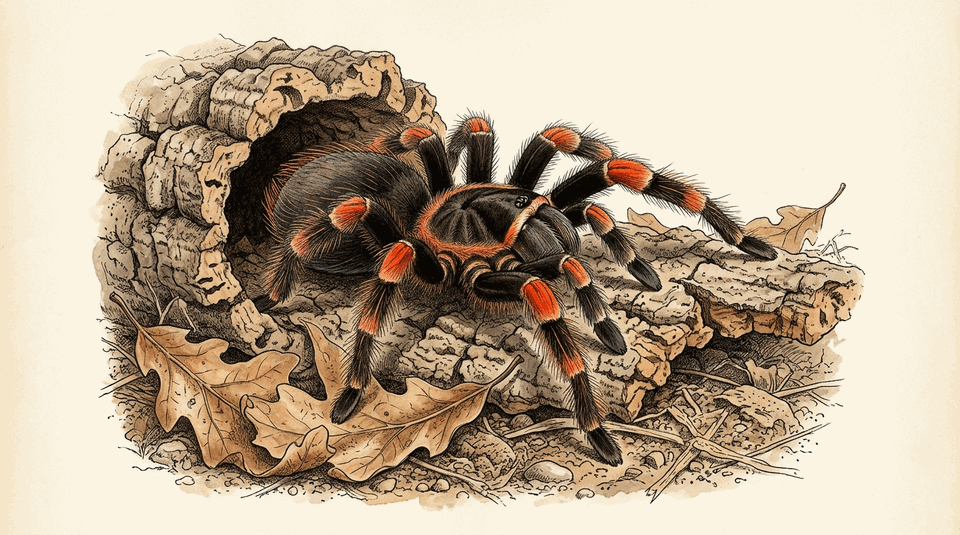
Species Profile & Temperament

| Trait | Overview |
|---|---|
| Origin | Scrublands and deserts of Mexico |
| Diet Type | Insectivore (Crickets, roaches, mealworms) |
| Activity | Crepuscular/Nocturnal (Terrestrial burrowers) |
| Temperament | Generally calm and docile, but very quick to flick urticating hairs if startled. |
| Handleability | Fair. Their urticating hairs are irritating. Handling is not generally recommended to avoid stressing the spider and getting "haired." |
| Difficulty | 2/5 — Easy (A classic, beautiful display tarantula) |
| Hardiness | 4/5 — Hardy (Thrives in dry, room-temperature environments) |
Housing & Enclosure
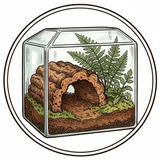
Terrarium Setup
- Type: Terrestrial. They require horizontal floor space, not vertical height.
- Size: A 5 to 10-gallon tank is ideal for a fully grown adult.
- The Fall Hazard: Terrestrial tarantulas are heavy-bodied and extremely fragile. A fall can kill them. Fill the enclosure with enough substrate to keep the climb height low.
Substrate & Decor
- Deep Substrate: Provide a deep layer of a dry substrate like Coco Coir (Eco-Earth), ReptiSoil, or a sand/soil mix.
- Hide: Provide a cork bark flat or a half-log to serve as a retreat.
Environment & Husbandry

Temperature & Humidity
- Temperature: Standard room temperature (72-80°F) is perfect. They do not require external heat sources like heat lamps or pads, which are dangerous and can cook them.
- Humidity: Brachypelma species come from arid environments and prefer it bone dry. Do not mist the enclosure. High humidity and damp substrate will cause them to climb the walls to escape the moisture.
Water
- Provide a shallow water dish at all times. Do not use a sponge in the dish. Sponges can grow bacteria. A shallow dish is all they need.
Diet & Feeding

- Staple Diet: Live crickets, dubia roaches, and mealworms.
- Feeding Schedule: Feed live prey sized for your spider. Ask us in store how often and what size to feed at each age.
- Note: Brachypelma species are notorious for fasting. They may refuse food for a long stretch, especially during the winter or prior to a molt. As long as their abdomen is plump and they have water, this is normal.
Molting (The Molt Warning)
- When your tarantula is preparing to molt, it will refuse food, become sluggish, and a bald patch on its abdomen will turn shiny and dark black.
- When they molt, they flip upside down on their backs. DO NOT TOUCH THEM OR FLIP THEM OVER. They are not dead. Touching a molting tarantula can kill it.
- Remove all live prey from the enclosure before a molt, and do not feed them again until their new fangs have hardened.
What We Use & Recommend
| Category | Product | Notes |
|---|---|---|
| Housing | Exo Terra Breeding Box (Large) | Ideal terrestrial footprint |
| Substrate | Zoo Med Eco Earth (Loose) | Keep completely dry for this species |
| Decor | Zoo Med Natural Cork Bark | Creates excellent, natural-looking hides |
| Diet | Live Crickets / Dubia Roaches | The best staple feeders |
Last updated: 2026-08-04
How We Keep Them at Critter Cabana & Gresham Pet Supply

- Oregon Winter Furnace Air vs. Molting Humidity: When Pacific Northwest furnaces kick on from October through April, indoor room humidity drops fast and dries out small enclosures from the top down. Rather than misting the spider or invert directly (which stresses terrestrial species and invites stagnant mold), we keep Mexican Red Knee Tarantula on dry substrate with a clean shallow water dish kept full and good cross-ventilation.
- Safe Room Heating in the Willamette Valley: If your house drops below 65°F on winter nights, never stick a heat pad on the bottom of a burrowing invertebrate tank—they dig down to escape heat and will cook themselves. Use a low-wattage side-mounted heat mat on a digital thermostat or warm the room ambiently to
72°–80°F. - Shopping at Newberg & Gresham: For enclosures, cork bark, substrates, springtails and feeders at Critter Cabana (Newberg) and Gresham Pet Supply, ask us what we have in store today.
Common Questions (FAQ)
How do I keep my Mexican Red Knee Tarantula warm and humid enough during an Oregon winter?
Target 72°–80°F room temperature with no heat lamp and 50-60% humidity. Keep the substrate dry and keep a clean shallow water dish filled. Never mist the spider directly. Never put a heat mat underneath the enclosure.
What size enclosure does a Mexican Red Knee Tarantula need?
An adult Mexican Red Knee Tarantula thrives in 5-10 Gallon Terrestrial with secure ventilation. For terrestrial tarantulas and scorpions, floor space and deep substrate matter most (keep open fall height low so a fall cannot hurt your spider); for arboreal species, prioritize vertical cork bark tubes and cross-ventilation.
Can I put isopods in a Mexican Red Knee Tarantula bioactive enclosure?
Most dry-setup tarantulas do best without a cleanup crew. Remove leftovers with tongs instead.
Where can I find Mexican Red Knee Tarantula, cork bark, and feeder insects in Oregon?
Ask us what we have in store today at our two exotic animal stores: Critter Cabana in Newberg (514 E First St, 503-537-2887) and Gresham Pet Supply (2185 NW Burnside Rd, 503-665-7606).
Shop supplies for this animal
Everything for your Mexican Red Knee Tarantula setup, ready for pickup in store or shipped to you.