
Mexican Fireleg Tarantula
Brachypelma boehmei
Species Profile & Temperament

| Trait | Overview |
|---|---|
| Origin | Pacific scrublands of Guerrero, Mexico (New World) |
| Diet Type | Insectivore (gut-loaded crickets, dubia roaches, mealworms) |
| Activity | Terrestrial. Often sits out on display. |
| Temperament | Skittish. Kicks hairs readily. |
| Handleability | Not a handling spider. Look, don't touch. |
| Urticating Hairs | Yes. It flicks irritating hairs readily when bothered. |
| Difficulty | Intermediate (simple setup, but a quick hair-kicker) |
| Temperature | 75–80°F ambient, no heat lamp |
| Humidity | 50–60%. Dry substrate and a constant shallow water dish. |
| Enclosure | 5–10 gallon dry terrestrial enclosure |
Safety Information

Urticating Hairs: The Mexican fireleg flicks irritating abdominal hairs readily when startled by vibration or tongs. The hairs itch and can irritate skin and eyes. Keep your face back when opening the lid, wash your hands after maintenance, and wash with soap and water if hairs get on you. Keep your hands away from your face.

Handling Precautions: Do not handle. If it ever must be moved, use a catch cup rather than bare hands, low over a soft surface. A fall can kill a tarantula.

Housing & Enclosure
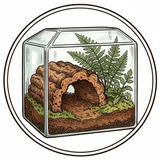
Enclosure Type & Size
- Type: Dry terrestrial.
- Minimum: A 5 to 10-gallon dry terrestrial enclosure.
- The Height Warning (CRITICAL): Use deep substrate so the fall from the surface to the lid is under 1.5 times the spider's leg span.
- Lids and ventilation: A solid or acrylic lid with ventilation. Avoid fine wire mesh.
Substrate
- Recommended: Dry coconut fiber or organic topsoil.
- Depth: 3 to 5 inches.
- Moisture: Keep the bedding dry. Never keep a swampy, tropical setup.
Décor & Enrichment
- Hides: A cork bark hide.
- Water Dish: A clean, shallow water dish, full at all times.
Temperature
| Zone | Temperature |
|---|---|
| Ambient | 75–80°F (24–27°C), no heat lamp |
| Cooler side | 72–78°F |
- Heating: Room temperature is right. Never use a heat lamp, and never run any heat source without a thermostat.
Humidity
- Target Range: 50–60%.
- How to Maintain: Dry substrate plus a constant shallow water dish. If the enclosure is very dry while the spider is in pre-molt, add a tiny splash of water at the dish edge only. Do not mist the enclosure.
Diet & Nutrition

Primary Diet
- Gut-loaded crickets, dubia roaches or mealworms. Remove uneaten prey within 24 hours.
- Ask us in store for a feeding schedule that fits your spider's size.
Slow Grower
- Brachypelma grow slowly and live many years. A fast of several weeks before a molt is normal.
Molting
- A spider lying on its back is molting, not dead. Never disturb it.
- Remove live insects from the enclosure right away.
- After a molt, wait about 7 days before feeding.
Health Red Flags
- Death curl. Legs curled tightly under the body.
- Abdomen rupture or fluid leak.
- A stuck molt.
A tarantula with any of these signs needs a vet who sees reptiles and exotic animals. Please do not try to treat it at home.
What We Use & Recommend
These are products we use and recommend for this species. Stock varies by store, so ask us what we have in store today.
| Category | Product | Notes |
|---|---|---|
| Enclosure | Terrestrial enclosure, 5 to 10 gallon | Prioritize floor space over height |
| Substrate | Zoo Med Eco Earth (Coco Fiber) | Use it dry |
| Hides | Zoo Med Natural Cork Bark (Curved) | A roof for their hide |
| Water Dish | Exo Terra Shallow Water Dish (Medium) | Keep full |
| Tools | Zoo Med 10-inch Feeding Tongs | Use them to keep your hands clear of hairs |
| Feeder Insects | Live Crickets or Dubia Roaches | Ask us what size to feed your spider |
Common Questions (FAQ)
Is the Mexican fireleg a good first tarantula?
Care is simple, but it is skittish and kicks irritating hairs readily, so we rate it Intermediate. It is a great display spider if you are happy to look and not touch.
What size enclosure does a Mexican fireleg need?
A 5 to 10-gallon dry terrestrial enclosure with 3 to 5 inches of dry substrate, a cork bark hide and a shallow water dish.
What temperature and humidity does it need?
Room temperature, 75–80°F, with no heat lamp. Humidity of 50–60% from dry substrate and a constant water dish. Do not mist.
Why does my tarantula kick hairs?
It is a defense. The hairs itch and can irritate skin and eyes. Keep your face back when opening the lid, wash your hands after maintenance and use a catch cup instead of bare hands.
How long should I wait to feed after a molt?
About 7 days. The new fangs are soft after a molt.
Where can I find this in Oregon?
Critter Cabana in Newberg (514 E First St, 503-537-2887) and Gresham Pet Supply (2185 NW Burnside Rd, 503-665-7606) are our two exotic animal stores. Call or stop in, and ask us what we have in today.
Shop supplies for this animal
Everything for your Mexican Fireleg Tarantula setup, ready for pickup in store or shipped to you.