
Ecuadorian Purple Tarantula
Avicularia purpurea

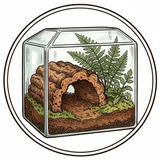
1. Breezy Cross-Ventilated Canopy & Upstairs Web Zone

2. Two Great Ways to Set Up Your Habitat
Why Old Care Sheets Were Wrong About Pinktoes!
Old 1990s books told people to put Pinktoes in glass tanks with sopping-wet moss and no airflow—and they died! In Ecuador, they live high in windy treetops:
Option A: Zilla Arboreal Micro Habitat (Our #1 Pick for Juveniles!)
Crystal-clear acrylic with cross-ventilation air slots on the sides and a front door that won't rip their top web.
Option B: Exo Terra 8"×8"×12" or 12"×12"×18" Tall Glass Terrarium
Has built-in front air vents right under the doors + a screen roof so fresh air circulates like a chimney and never gets stuffy!
Water Dish Yes, Swamp No!
Keep the bottom dirt mostly dry, and hydrate them the right way:
Option A: Elevated Magnetic Water Cup + Floor Water Dish
Hot-glue or magnet a little water cup high up on the wall right next to their cork bark (or on the floor) and keep it full 24/7!
Option B: Light Water Droplets on Leaves 1× a Week
Once a week, spritz a few water drops onto the fake leaves outside their web tunnel so they can sip raindrops without soaking the dirt.
Setting Up Their 'Upstairs Apartment'
Pinktoes want to spin a cozy silk tube hammock right near the ceiling:
Option A: Tall Cork Bark Tube + Leafy Cluster at the Top
Stand a cork tube or slab vertically so it stops 2 inches below the roof, and pack fake leaves around the top corner for privacy.
Option B: Front-Opening Door
Always pick a front-opening enclosure so opening the door doesn't rip their silk web at the top!

3. Canopy Bug Feeding & Molting Guide
Best Treetop Spider Feeders:
Naturally climb right up to the top web zone!
Touch gently to the edge of their silk funnel
Awesome juicy treat after a molt
Don't feed until their new fangs turn jet-black

4. Four Keys to a Happy, Thriving Ecuadorian Purple Tarantula
Side Vents Are Everything
Never keep a Pinktoe in a tank that only has air holes on the lid! Side-to-side cross-ventilation is the secret to keeping Avicularia healthy.
Pack Clutter at the Top
Put 80% of your fake leaves and cork bark in the top third of the tank—they barely ever touch the floor!
Cute Little Hops
Pinktoes almost never bite, but when spooked they take funny little frog-hops from hand to hand! Always sit over a table or bed when rehousing.
Watch the Purple Glow Up!
Babies start out dusty blue-grey with dark stripes, and every single molt unlocks brighter electric violet metallic fuzz!

Bring-Home Shopping Checklist
Tap items to check them off on your phone while you shop at Gresham Pet Supply.
Cross-Ventilated Tall Tank & Decor
Water Cup & Tools
Live Feeder Bugs
Complete Reference Notes & Oregon Keeping Guide
Safety Information
Venom/Defense: Their most common defense mechanism is actually to shoot feces at a perceived threat! If startled, they may shoot droppings at you.
First Aid: Wash any bite that breaks the skin with soap and water. Ask your doctor about any health concerns.
Handling Precautions: Do not handle this species. They are arboreal spiders that can run at lightning speed and jump massive distances. If they jump out of your hands, they can easily get lost or injure themselves.

Housing & Enclosure
Enclosure Type & Size
- Type: Arboreal. This species lives high in the trees. The enclosure must be taller than it is wide.
- Minimum: A tall arboreal terrarium for an adult. Ask us in store for the right size for your spider.
- Spiderlings (Slings): Must be kept in small, tall deli cups or acrylic sling enclosures.
- The Mesh Warning: If your enclosure has a wire mesh screen top, it is highly recommended to replace it with drilled acrylic. Arboreal tarantulas will climb on the ceiling, and their tiny claws can get stuck in the mesh, which can injure their legs.
The Ventilation Rule (CRITICAL)
- Stagnant Air: The biggest danger to this species is a humid enclosure with stagnant air.
- Cross-Ventilation: You must provide cross-ventilation (air flowing horizontally through the tank). If you only have a screen top (which only provides top ventilation), the heavy, humid air will sit at the bottom of the tank and can make the spider sick. If condensation forms on the glass, you do not have enough ventilation.
Substrate
- Recommended: Coconut fiber (Eco Earth) or organic topsoil.
- Depth: A shallow layer is fine. They will never burrow; they use the soil simply to catch moisture.
Décor & Enrichment
- Anchor Points (CRITICAL): You must provide vertical structures (tall cork bark tubes, thick branches, fake vines) that reach near the top of the enclosure. The spider will build a tubular web hammock high up in these branches.
- Water Dish: Provide a small water dish. Note: You must often glue or magnetize the water dish high up on the glass wall, as many arboreal tarantulas refuse to walk down to the dirt to drink.
Temperature
| Zone | Temperature |
|---|---|
| Ambient | Comfortable room temperature |
- Heating: Room temperature is perfect. Never use a heat lamp. If you ever need extra heat, use a side heat pad on a thermostat, away from the web.
Humidity
- Target Range: Moderate, with strong airflow. Ask us in store for help.
- How to Maintain: Do not soak the dirt to achieve this humidity (which causes stagnant air). Instead, keep the dirt mostly dry, provide a water dish, and never mist the spider or its web. If you mist at all, lightly mist one wall away from the web and let it dry out completely.
Diet & Nutrition
Primary Diet
- Live crickets or dubia roaches. Toss the prey directly into the spider's web hammock if possible, as they rarely hunt on the ground.
Feeding Schedule
Feed live prey sized for your spider. Ask us in store how often and what size to feed at each age.
Molting
During the Molt
- DO NOT disturb or handle the spider. Unlike terrestrial spiders that flip on their backs, arboreal tarantulas often molt suspended high in their web hammocks. This is normal.
- Remove any live crickets from the enclosure immediately.
Post-Molt Care
- Wait until the new fangs have hardened before offering food. Ask us in store if you are unsure when to feed again.
What We Use & Recommend
These are products we use and recommend for this species. Stock varies by store, so ask us what we have in store today.
| Category | Product | Notes |
|---|---|---|
| Enclosure | Exo Terra 12x12x18 Glass Terrarium | Perfect arboreal size. Highly recommend modifying the screen lid. |
| Substrate | Zoo Med Eco Earth (Coco Fiber) | A shallow layer to help catch moisture |
| Hides | Zoo Med Natural Cork Bark (Tall Tubes) | Essential for them to build their web hammocks inside |
| Water Dish | Magnaturals Magnetic Water Dish | Allows you to put the water dish high up on the glass |
| Décor | Fluker's Repta-Vines | Gives them plenty of anchor points near the ceiling |
| Feeder Insects | Live Crickets | Crickets tend to climb better than roaches, making them easier for arboreals to catch |
Last updated: 2026-08-04
How We Keep Them at Critter Cabana & Gresham Pet Supply
- Oregon Winter Furnace Air vs. Molting Humidity: When Pacific Northwest furnaces kick on from October through April, indoor room humidity drops fast and dries out small enclosures from the top down. Rather than misting the spider or invert directly (which stresses terrestrial species and invites stagnant mold), we keep Ecuadorian Purple Tarantula with strong cross-ventilation, mostly dry substrate and a water dish it can reach. We never mist the spider or its web, and we never let the air go stagnant.
- Safe Room Heating in the Willamette Valley: If your house gets cold on winter nights, never put a heat pad under the tank. Use a low-wattage side-mounted heat mat on a digital thermostat, away from the web, or keep the room at a comfortable room temperature.
- Shopping at Newberg & Gresham: For enclosures, cork bark, substrates, springtails and feeders at Critter Cabana (Newberg) and Gresham Pet Supply, ask us what we have in store today.
Common Questions (FAQ)
How do I keep my Ecuadorian Purple Tarantula warm and humid enough during an Oregon winter?
Keep your spider at a comfortable room temperature with no heat lamp. Keep strong cross-ventilation, mostly dry substrate and a filled water dish. Never mist the spider or its web. Never put a heat mat underneath the enclosure. Ask us in store for the right setup for your spider.
What size enclosure does a Ecuadorian Purple Tarantula need?
An adult Ecuadorian Purple Tarantula needs a tall, cross-ventilated enclosure. Ask us in store for the right size for your spider. For terrestrial tarantulas and scorpions, floor space and deep substrate matter most (keep open fall height low so a fall cannot hurt your spider); for arboreal species, prioritize vertical cork bark tubes and cross-ventilation.
Can I put isopods in a Ecuadorian Purple Tarantula bioactive enclosure?
Around molting tarantulas and scorpions, skip big, hungry isopods and stick to springtails, so a soft, newly molted animal is never nibbled.
Where can I find Ecuadorian Purple Tarantula, cork bark, and feeder insects in Oregon?
Ask us what we have in store today at our two exotic animal stores: Critter Cabana in Newberg (514 E First St, 503-537-2887) and Gresham Pet Supply (2185 NW Burnside Rd, 503-665-7606).
Shop supplies for this animal
Everything for your Ecuadorian Purple Tarantula setup, ready for pickup in store or shipped to you.