
Curly Hair Tarantula
Tliltocatl albopilosus
Species Profile & Temperament

| Trait | Overview |
|---|---|
| Origin | Scrublands and forests of Central America |
| Diet Type | Insectivore (Crickets, roaches, superworms) |
| Activity | Crepuscular/Nocturnal (Burrowers that wait near the entrance for prey) |
| Temperament | One of the most docile, slow-moving tarantulas in the hobby. Rarely bolts or acts defensive. |
| Handleability | Best kept as a display pet. A fall can kill them. Like all New World tarantulas, they possess urticating (itchy) hairs on their abdomen that they can kick if frightened. |
| Difficulty | 1/5 — Beginner (A great starter tarantula) |
| Hardiness | 5/5 — Bulletproof (Highly forgiving of temperature/humidity fluctuations) |
Housing & Enclosure
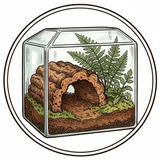
Terrarium Setup
- Type: Terrestrial / Opportunistic Burrower. They need floor space, not height.
- Size: A low, wide terrestrial enclosure. Ask us in store for the right size for your spider.
- The Fall Hazard: Tarantulas are extremely fragile. A fall can kill them. Use enough substrate that the gap from the dirt to the lid stays short.
Substrate & Decor
- Deep Substrate: They love to dig and bulldoze their enclosure. Provide deep, moisture-retaining substrate like Coco Coir (Eco-Earth), ReptiSoil, or a peat moss mix.
- Hide: Provide a half-log, cork bark tube, or a plastic flower pot half-buried in the dirt to act as a burrow starter.
Environment & Husbandry

Temperature & Humidity
- Temperature: If you are comfortable in a t-shirt, the tarantula is comfortable. Standard room temperature is perfect. They do not need heat lamps or heat pads (which can cook them or dry them out).
- Humidity: You do not need to constantly mist the enclosure. Instead, let their water dish overflow slightly to keep the bottom layers of the substrate moist while the top layer remains dry.
Water
- Provide a shallow water dish at all times. Do not use a sponge in the dish. Sponges can grow mold and bacteria.
Diet & Feeding

- Staple Diet: Live crickets, dubia roaches, and superworms.
- Feeding Schedule: Young spiders eat more often than adults. Ask us in store for a feeding plan that fits your spider's size.
- Overfeeding: Tarantulas will eat until their abdomens are dangerously huge. A healthy tarantula should have an abdomen roughly the same size as (or slightly larger than) its carapace (head).
Molting (The Molt Warning)
- When your tarantula is preparing to molt, it will refuse food, become sluggish, and its abdomen will turn shiny and dark. It may barricade itself in its burrow.
- When they molt, they flip upside down on their backs. DO NOT TOUCH THEM OR FLIP THEM OVER. They are not dead. Touching a molting tarantula can kill it.
- Remove all live prey from the enclosure before a molt, and wait before feeding after a molt so their new fangs can harden.
What We Use & Recommend
| Category | Product | Notes |
|---|---|---|
| Housing | Exo Terra Breeding Box (Large) | Ideal footprint and ventilation for adults |
| Substrate | Zoo Med Eco Earth (Loose) | Retains moisture well for burrowing |
| Decor | Zoo Med Natural Cork Bark | Creates excellent, natural-looking hides |
| Diet | Live Crickets / Dubia Roaches | The best staple feeders |
Last updated: 2026-08-04
How We Keep Them at Critter Cabana & Gresham Pet Supply

- Oregon Winter Furnace Air vs. Molting Humidity: When Pacific Northwest furnaces kick on from October through April, indoor room humidity drops fast and dries out small enclosures from the top down. Rather than misting the spider or invert directly (which stresses terrestrial species and invites stagnant mold), we keep Curly Hair Tarantula by using a deep moisture-retaining substrate bed (ReptiSoil + Coco Fiber + Sphagnum Moss), overflowing the water dish slightly into one corner, and maintaining cross-ventilation.
- Safe Room Heating in the Willamette Valley: If your house gets cold on winter nights, never stick a heat pad on the bottom of a burrowing invertebrate tank—they dig down to escape heat and will cook themselves. Use a low-wattage side-mounted heat mat on a digital thermostat or keep the room at a comfortable room temperature.
- Shopping at Newberg & Gresham: For enclosures, cork bark, substrates, springtails and feeders at Critter Cabana (Newberg) and Gresham Pet Supply, ask us what we have in store today.
Common Questions (FAQ)
How do I keep my Curly Hair Tarantula warm and humid enough during an Oregon winter?
Keep your spider at a comfortable room temperature with no heat lamp. Keep the lower substrate slightly damp and the top dry by letting the water dish overflow a little. Never mist the spider directly. Never put a heat mat underneath the enclosure. Ask us in store for the right setup for your spider.
What size enclosure does a Curly Hair Tarantula need?
An adult Curly Hair Tarantula needs a low, wide enclosure with secure ventilation. Ask us in store for the right size for your spider. For terrestrial tarantulas and scorpions, floor space and deep substrate matter most (keep open fall height low so a fall cannot hurt your spider); for arboreal species, prioritize vertical cork bark tubes and cross-ventilation.
Can I put isopods in a Curly Hair Tarantula bioactive enclosure?
Around molting tarantulas and scorpions, skip big, hungry isopods and stick to springtails, so a soft, newly molted animal is never nibbled.
Where can I find Curly Hair Tarantula, cork bark, and feeder insects in Oregon?
Ask us what we have in store today at our two exotic animal stores: Critter Cabana in Newberg (514 E First St, 503-537-2887) and Gresham Pet Supply (2185 NW Burnside Rd, 503-665-7606).
Shop supplies for this animal
Everything for your Curly Hair Tarantula setup, ready for pickup in store or shipped to you.