
Brazilian Black Tarantula
Grammostola pulchra
Species Profile & Temperament

| Trait | Overview |
|---|---|
| Origin | Grasslands of southern Brazil and Uruguay (New World) |
| Diet Type | Insectivore (gut-loaded crickets, dubia roaches, mealworms) |
| Activity | Terrestrial. Often sits out in view. |
| Temperament | Calm and slow-moving. Best enjoyed as a display pet. |
| Handleability | Not recommended. A fall can be fatal. |
| Urticating Hairs | Yes. Like all New World tarantulas, it can flick irritating hairs from its abdomen if stressed. |
| Difficulty | Easy |
| Temperature | 72–80°F room temperature, no heat lamp |
| Humidity | 55–65%. Mostly dry surface, with a slightly damp bottom corner and a water dish. |
| Enclosure | 10-gallon terrestrial enclosure with a low fall height and deep substrate |
Safety Information

Urticating Hairs: Their main defense is kicking tiny hairs off the abdomen. The hairs itch and can irritate skin and eyes. If hairs get on you, wash with soap and water and keep your hands away from your face.

Handling Precautions: This is a heavy-bodied spider. A fall of even 8–10 inches onto a hard surface can fatally rupture its abdomen. It is a display pet, so do not handle it. If it must be moved, do it low over a soft surface, such as sitting on the floor.

Housing & Enclosure
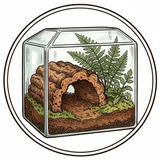
Enclosure Type & Size
- Type: Terrestrial ground dweller.
- Minimum: A 10-gallon terrestrial enclosure for a subadult or adult. Young spiders do best in a smaller, appropriately sized terrestrial container. Ask us in store.
- The Height Warning (CRITICAL): Do not use a tall glass column. Pack deep substrate so the distance from the surface to the lid stays short, no more than about 1.5 times the spider's leg span.
- Lids and ventilation: Use cross-ventilation. Avoid a wire mesh lid, where their claws can catch.
Substrate
- Recommended: Coconut fiber (Eco Earth), peat moss, or organic topsoil, packed firmly.
- Depth: 4 to 5 inches.
- Avoid: Bark chips, wood chips and sand.
Décor & Enrichment
- Hides: A cork bark flat or curved cork bark gives them a place to settle.
- Water Dish: A clean, shallow water dish, filled at all times. No sponges.
Temperature
| Zone | Temperature |
|---|---|
| Ambient | 72–80°F (22–27°C), no heat lamp |
| Cooler side | 72–78°F |
- Heating: Room temperature is right. Never use a basking bulb or a heat pad under the tank.
Humidity
- Target Range: 55–65%.
- How to Maintain: Keep the surface mostly dry, with one lower corner slightly damp. Keep the water dish full and overflow it slightly about once a week, rather than spraying the whole enclosure. Never spray the spider.
Diet & Nutrition

Primary Diet
- Gut-loaded crickets, dubia roaches or mealworms. If you use mealworms or superworms, crush the head first so they cannot burrow and chew on the spider.
- Remove uneaten prey after 24 hours.
- Ask us in store for a feeding schedule that fits your spider's size.
Pre-Molt Fasting
- A shiny, dark, bald patch on a plump abdomen, hiding and refusing food usually means a molt is coming. Stop offering live prey and keep the water dish full. Slow-growing spiders can fast for a long time. This is normal.
Molting
Molting is the process of shedding the exoskeleton to grow. It is the most vulnerable period in a tarantula's life.
- A spider lying on its back is molting, not dead. Do not touch it or flip it over.
- Remove any live insects from the enclosure right away. A live cricket can injure a molting spider.
- After an adult molt, wait at least a week and until the fangs have turned solid black before feeding. Fangs are soft after a molt and feeding too soon can injure them.
Health Red Flags
- Death curl. Legs tucked tightly under the body.
- Clear or white fluid weeping from the abdomen or a leg after a fall.
- A stuck molt or extreme lethargy.
A tarantula with any of these signs needs a vet who sees reptiles and exotic animals. Please do not try to treat it at home.
What We Use & Recommend
These are products we use and recommend for this species. Stock varies by store, so ask us what we have in store today.
| Category | Product | Notes |
|---|---|---|
| Enclosure | Terrestrial enclosure, 10 gallon or larger, low height | Use deep substrate to keep the fall short |
| Substrate | Zoo Med Eco Earth (Coco Fiber) | Pack it firmly, 4 to 5 inches |
| Hides | Zoo Med Natural Cork Bark (Curved) | A roof for their burrow |
| Water Dish | Exo Terra Shallow Water Dish (Medium) | Keep full, no sponges |
| Tools | Zoo Med 10-inch Feeding Tongs | Safe maintenance and feeding |
| Feeder Insects | Live Crickets or Dubia Roaches | Ask us what size to feed your spider |
Common Questions (FAQ)
What size enclosure does a Brazilian black tarantula need?
A 10-gallon terrestrial enclosure is right for a subadult or adult. Keep it low and fill it with 4 to 5 inches of packed substrate so a fall is short. Avoid tall glass tanks and wire mesh lids.
What temperature and humidity does it need?
Room temperature, 72–80°F, with no heat lamp. Humidity of 55–65%, with a mostly dry surface, one slightly damp bottom corner and a full water dish. Never put a heat pad under the tank.
Can I handle my Brazilian black?
We do not recommend it. It is calm, but it is heavy and a fall of even 8 to 10 inches can kill it. Like every New World tarantula it can also kick itchy hairs. Enjoy it as a display pet.
Why won't my tarantula eat?
A tarantula that is plump but refusing food is usually heading into a molt. Pull the uneaten prey, keep the water dish full and try again later. This is normal for a slow-growing spider.
My tarantula is lying on its back. Is it dead?
Probably not. It is most likely molting. Leave it alone, do not flip it, and take any live insects out of the enclosure.
Where can I find this in Oregon?
Critter Cabana in Newberg (514 E First St, 503-537-2887) and Gresham Pet Supply (2185 NW Burnside Rd, 503-665-7606) are our two exotic animal stores. Call or stop in, and ask us what we have in today.
Shop supplies for this animal
Everything for your Brazilian Black Tarantula setup, ready for pickup in store or shipped to you.