
Red-footed Tortoise
Chelonoidis carbonarius
Species Profile & Temperament

| Trait | Overview |
|---|---|
| Origin | South America (Tropical rainforests and humid savannas) |
| Diet Type | Omnivore (Greens, Fruits, and some Animal Protein) |
| Activity | Diurnal (active during the day) |
| Temperament | Very docile, highly active, and curious. |
| Handleability | Easy to handle, though they can be heavy as adults. |
| Social Needs | Best kept alone. |
| Difficulty | 2/5 — Easy (A fantastic, manageable tortoise if you can maintain high humidity) |
| Hardiness | 3/5 — Moderate (Prone to respiratory infections if kept too cold or dry) |
Notable Morphs & Locales

Tortoises do not typically have genetic "morphs" like snakes or geckos, but Red-footed tortoises have a highly sought-after, distinct locale:
- Cherry Head: A smaller, more vibrant variant native to regions in Brazil and Paraguay. True Cherry Heads often feature brilliant cherry-red heads and legs, and they generally stay slightly smaller (8–10 inches) than standard Red-foots (12–14 inches). They are heavily prized in the pet trade.
Housing & Enclosure
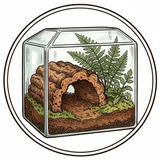
Enclosure Size
- Hatchlings & Juveniles: A large closed-chamber enclosure is required to trap humidity. Ask our staff to help you choose a size. Open-topped tortoise tables are not recommended for babies, as the humidity escapes into the room.
- Adult Enclosure: Large and roomy. Ask our staff to help you choose a size.
- Outdoor Housing: Adults do fantastic outdoors during warm, humid summers, but they MUST be brought inside or provided with a heated, insulated shed when nights turn cool.
Enclosure Setup
- Substrate: Because they require high humidity, use substrates that hold moisture without molding. A thick mix of Zilla Jungle Mix, Coconut Coir, Cypress Mulch, or Orchid Bark works best.
- Decor & Microclimates: Provide plenty of broad-leafed plants (live or fake) to provide shade and security. They do not burrow deeply like desert tortoises, but they appreciate low, heavy hides filled with damp sphagnum moss.
Humidity & Water
- Humidity: High. This is critical. Ask our staff for the range we keep ours at. Red-foots come from humid jungle environments. If kept too dry, they will develop severe respiratory infections, and babies will develop permanent shell deformities (pyramiding).
- Water Source: Provide a large, shallow water dish that the tortoise can fully climb into and soak. Red-foots love to soak and will often defecate in their water, so it must be cleaned daily.
Temperature & Lighting
- Temperatures: Give them a warm side and a cooler side, and keep them warm at night too. Ask our staff for the range we keep ours at, and check it with a thermometer.
- Lighting: A high-quality UVB bulb (T5 5% or 6% Forest Bulb) is absolutely essential for indoor enclosures to metabolize calcium and prevent Metabolic Bone Disease.
Diet & Nutrition
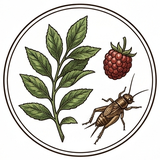
The Omnivore Tortoise
Unlike desert tortoises (which should not get fruit or meat), Red-footed tortoises are opportunistic jungle scavengers. They require a rich, varied diet:
- Greens & Veggies (most of the diet): Collard greens, dandelion greens, mustard greens, turnip greens, squash, and bell peppers. (Avoid spinach and iceberg lettuce).
- Fruits (some): Mango, papaya, melon, berries, and bananas. They have a sweet tooth and love colorful foods!
- Protein (a small treat now and then): In the wild, they eat carrion and bugs. Offer a small protein treat now and then; ask us what kind. A quality omnivore tortoise pellet (like Mazuri Tortoise Diet) also adds a little protein.
Supplements
- Calcium: Dust their food with a calcium supplement and follow its label for how often. Ask our staff which calcium we recommend for a tortoise kept indoors.
- Cuttlebone: Provide a cuttlebone in the enclosure to naturally trim their beak and provide extra calcium.
Health & Husbandry

Common Health Issues
- Pyramiding / Shell Deformity — Symptoms: Lumpy, raised scutes on the shell instead of smooth, rounded growth. / Cause: Dry air or dehydration while young, a lack of calcium/UVB, or too much protein. / Prevention: Keep babies in a closed-chamber enclosure with high humidity and soak them often. Ask our staff for the range and schedule we use.
- Respiratory Infection (RI) — Symptoms: Bubbles blowing from the nose, wheezing, lethargy. / Cause: Cold temperatures combined with wet substrate. Red-foots need to be warm and humid, not cold and wet. / Next step: See a vet who sees reptiles.
- Beak Overgrowth — Symptoms: The front of the mouth looks like a long parrot beak, preventing them from eating easily. / Cause: Feeding only soft foods (like bananas). / Prevention: Feed on a rough piece of slate rock so they file their beak down while eating, or offer cuttlebone.
What We Use & Recommend

These are products we use and recommend for Juvenile/Indoor Red-footed Tortoise setups. Stock varies by store, so ask us what we have in store today.
| Category | Product | Notes |
|---|---|---|
| Enclosure | Zoo Med Tortoise House | Best for babies. Cover part of the screen top to hold humidity, but never put glass or plastic between the UVB bulb and the tortoise. |
| Substrate | Zilla Jungle Mix mixed with Zilla Coconut Husk | Excellent for holding the high humidity Red-foots require |
| Heating | Exo Terra Intense Basking Spot Bulb (75w-100w) | Creates a wide, hot basking zone |
| UVB Lighting | Exo Terra Reptile UVB100 (Tropical) | Proper UVB is critical for bone growth |
| Diet | Mazuri Tortoise Diet (LS or Original) | An excellent staple pellet that provides the slight protein bump they need |
| Supplements | Zoo Med ReptiCalcium | Ask us which calcium fits an indoor tortoise |
Last updated: 2026-08-04
How We Keep Them at Critter Cabana & Gresham Pet Supply
- Beating Dry Oregon Furnace Air (and Summer Heat Spikes): Across the Willamette Valley and Portland Metro, running the house furnace all winter drops indoor humidity to 25–35%, which quickly causes stuck sheds and dehydration in screen-top tanks. To hold steady humidity for Red-footed Tortoise, our crew uses a deep substrate bed (or our store-shelf 10-Part Bioactive Mix of ReptiSoil, Coco Fiber, Orchiata Bark, Sphagnum Moss, and Leaf Litter), a dedicated humid hide packed with damp sphagnum moss, and partial screen cover when needed.
- Thermostat & Linear UVB Standard: Every heating element in our Newberg and Gresham reptile rooms runs on a thermostat probe, with a warm side and a cool retreat set to the range we keep ours at, paired with
species-appropriate lightingon a 12-hour day/night timer. In summer, if an upstairs room climbs above 82°F, a dimming thermostat automatically backs down the basking lamp so the cool side never overheats. - Shopping at Newberg & Gresham: For enclosures, thermostats, UVB lighting, bioactive supplies, springtails, isopods and feeders at Critter Cabana (Newberg) and Gresham Pet Supply, ask us what we have in store today.
Common Questions (FAQ)
What size tank does an adult Red-footed Tortoise actually need?
An adult Red-footed Tortoise needs a large, roomy enclosure with a warm side and a cooler side. Ask our staff to help you choose a size and for the temperature range we keep ours at.
How do I keep Red-footed Tortoise humidity up during dry Oregon winters?
Oregon winter furnace heat dries out thin bedding fast. Use a deep moisture-retaining substrate mix (such as Zoo Med ReptiSoil blended with coco fiber, Orchiata bark, and sphagnum moss), provide an enclosed humid hide, and cover 50–70% of an open screen top with HVAC foil tape or a PVC panel if ambient humidity drops too low.
Where can I get Red-footed Tortoise setup supplies, live feeders, and thermostats in Oregon?
Ask us what we have in store today at Critter Cabana in Newberg (514 E First St, 503-537-2887) and Gresham Pet Supply (2185 NW Burnside Rd, 503-665-7606).
Shop supplies for this animal
Everything for your Red-footed Tortoise setup, ready for pickup in store or shipped to you.