
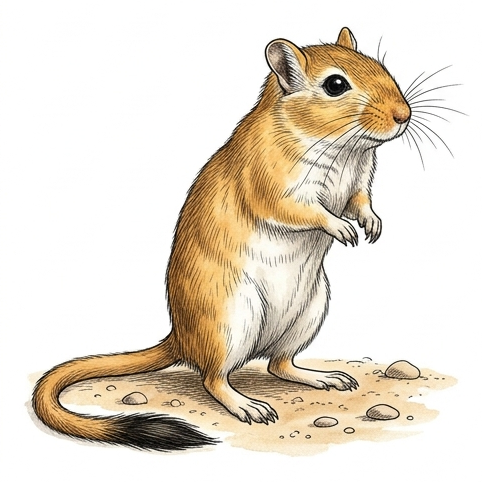
Gerbil
Meriones unguiculatus
1. Chew-Proof Glass Tank, 8–10" Deep Bedding & Sand Bath
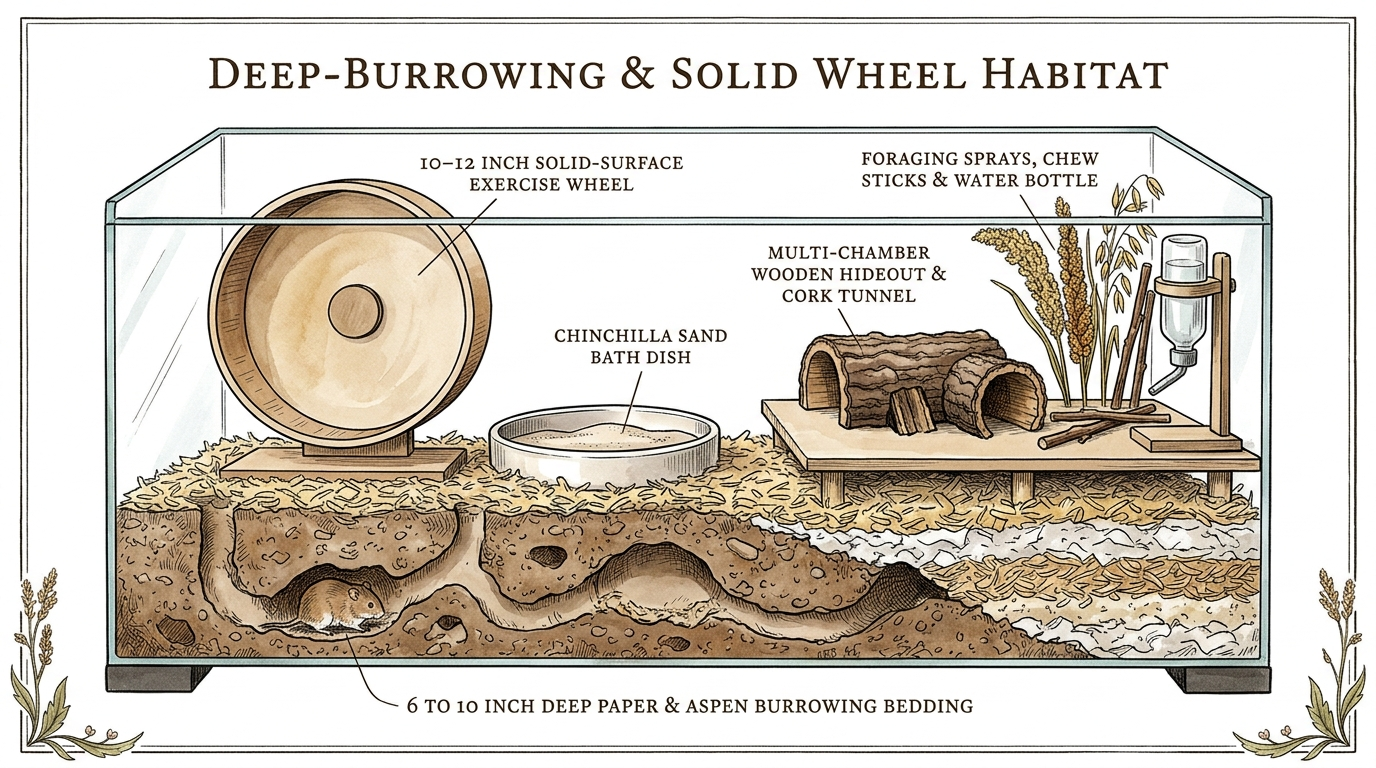

2. Two Great Ways to Set Up Your Habitat
Enclosure: 20L / 40B Glass Tank vs. Plastic-Bottom Wire Cages
Critical Chew Rule: Gerbils are nature's woodchippers—they will chew right through a plastic cage base in a single weekend and kick bedding 3 feet across the room!
Option A: 20-Gallon Long or 40-Gallon Breeder Glass Tank + Mesh Lid (Our Top Pick!)
100% chew-proof, keeps all 8–10 inches of burrowing bedding inside the glass, and lets you watch your pair excavate multi-room underground burrows.
Option B: Glass Tank + Wire 'Tank Topper' Loft
Want extra space? Put their water bottle, ceramic food dish, sand bath, and wheel up in a metal tank-topper loft while filling the entire bottom tank with deep digging bedding!
The 3-Layer 'Rebar' Burrowing Mix & Sand Bath
In the Gobi Desert, plant roots hold gerbil burrows together—replicate that at home:
Option A: 50% Paper Bedding + 30% Kiln-Dried Aspen + 20% Timothy Hay
Alternate layers of Carefresh/Clean & Cozy paper, aspen, and long-strand Timothy hay, then press it down firmly so their tunnels hold their shape for weeks!
Option B: Ceramic Jar Chinchilla Sand Bath (Never Water!)
Give a wide ceramic dish or tilted glass cookie jar with Chinchilla Bath Sand. Rolling in sand keeps their desert coat glossy and oil-free.
Same-Sex Pairs Only (Why Trios 'De-Clan')
Gerbils are deeply social and groom, sleep, and thump warnings together—but group size matters:
Option A: Bonded Same-Sex Pair (2 Brothers or 2 Sisters)
A pair of 2 littermates is the most stable, lifelong bond! (Never clean 100% of the bedding at once, or they can forget each other's scent and fight!).
Option B: 9–11" Solid Wood or Metal Wheel + Daily Cardboard
Skip thin plastic wheels they'll chew to pieces! Use a 9–11" solid wood or metal wheel and toss in 2–3 cardboard toilet paper rolls or egg cartons every single day.

3. Lean Desert Granivore Diet & Scatter Foraging
Gerbil Tail Safety & Cardboard Shredding Tips:
A gerbil's tufted tail skin slips off permanently ('tail slip') if pulled!
Hand-feed a sunflower seed as a small treat to tame fast!
Unscented paper towel tubes, tissue boxes & hay cubes keep teeth trim
Use a glass Lixit bottle or metal guard so they cannot chew the plastic tube

4. Four Keys to a Happy, Thriving Gerbil
Prevent 'Tail Slip' Injuries
In the wild, if a bird grabs a gerbil's tail, the fur and skin detach so the gerbil can escape—and it never grows back. Always scoop gerbils in a ceramic mug, tunnel, or cupped hands!
Keep 1/3 Old Bedding
Because gerbils only pee a few drops a day, their tank stays fresh a long time! When cleaning, always mix some of their clean old bedding back in to preserve their shared pair scent.
Watch for Red Nose Rub
If a gerbil has a red, raw nose ('sore nose'), remove any wire cage bars they might be chewing and verify their bedding is dust-free paper/aspen (never cedar!).
One Big Sleeping Hide
Unlike guinea pigs that want separate rooms, a bonded pair of gerbils should share one large multi-chamber wooden hideout so they don't claim separate territories!

Bring-Home Shopping Checklist
Tap items to check them off on your phone while you shop at Gresham Pet Supply.
Chew-Proof Tank & Deep Bedding
Wheel, Sand Bath & Chews
Food & Chew-Proof Water
Complete Reference Notes & Oregon Keeping Guide
The "Tail Slip" Warning

CRITICAL HANDLING RULE: Never, ever pick up a gerbil by its tail. Gerbils have a defense mechanism called "tail slip" or degloving. If a predator (or a human hand) grabs their tail, the skin and fur of the tail can slip off (degloving), leaving the tail bare. This is painful, the tail is usually lost, and it needs a vet. Always scoop them up from underneath using two hands.
Housing & Enclosure
Enclosure Size & Type
- Type: Glass Aquarium with a secure, locking screen lid.
- Why Not Wire Cages? Wire cages are terrible for gerbils for two reasons: 1) Gerbils require incredibly deep bedding to burrow, which they will kick out through the bars onto your floor. 2) Gerbils are obsessive chewers and will endlessly chew wire bars, which can break teeth and rub their noses raw.
- Minimum: A 20-gallon "Long" aquarium for a pair.
- Recommended: A 40-gallon breeder aquarium for a pair.
Bedding & Substrate
- Depth (CRITICAL): Provide bedding deep enough to burrow. Gerbils are master architects and spend their entire lives building complex tunnel systems.
- Recommended: Paper-based bedding (Carefresh, Kaytee Clean & Cozy) mixed with orchard grass hay to give the tunnels structural integrity.
- Avoid: Cedar and pine shavings (toxic aromatic oils).
- Cleaning Schedule: Because they drink very little and produce very little waste, spot-clean soiled bedding as needed. For a partial change, keep some clean old bedding so the habitat still smells like home. Do a full change only when the bedding is soiled through, after sickness, or after a move.
Décor & Enrichment
- Chewing: Gerbils chew constantly to wear down their continuously growing teeth. Provide an endless supply of cardboard (toilet paper rolls, egg cartons) and safe wood blocks. They will destroy a cardboard tube in minutes.
- Exercise Wheel: Must be a solid-surface wheel (no wire mesh, which can catch their toes and tail). Pick one big enough that their back stays straight (size it by the wheel's label).
- Sand Bath: Provide a heavy ceramic bowl filled with chinchilla bathing sand (not dust). They will roll in it to keep their coats clean and oil-free.
Diet & Nutrition
Primary Diet
- Pellets First: Feed a uniform, species-specific gerbil pellet or block (like Oxbow Essentials or Mazuri) as the main diet. On a seed mix, gerbils often pick out the fatty sunflower seeds and leave the healthy bits, leading to obesity.
- Feeding Amount: Follow the food's label.
Hay
- Providing a handful of Timothy or Orchard grass hay daily is excellent for chewing and aids in their digestion.
Treats (Sparingly)
- Occasional: Tiny bits of carrot, broccoli, or apple (no seeds).
- Protein: Dried mealworms are an excellent treat, mimicking the insects they eat in the wild.
Foods to Avoid
- Avoid: Grapes and raisins
- Avoid: Citrus fruits
- Avoid: Sugary yogurt drops or honey sticks
Water
- Provide fresh water daily via a glass or thick plastic water bottle. If you use a thin plastic bottle, they will chew a hole in it and flood their burrows.
Handling & Behavior
Social Needs
- Strictly Social: In the wild, they live in large family clans. They must be kept in same-sex pairs (usually two males or two females).
- Introductions: The easy start is a same-sex pair that already lives together. If you add a gerbil later, go slow, use a neutral space, and separate them if they fight.
Behavioral Notes
- Thumping: If a gerbil gets spooked, it will rapidly drum its hind legs on the ground to warn the rest of the colony of danger.
- Burrowing: You will rarely see your gerbils sleeping out in the open. They sleep deep in their tunnel network.
What We Stock & Use in Our Stores
These are products we carry and recommend for this species. Ask any associate for help finding them in-store.
| Category | Product | Notes |
|---|---|---|
| Enclosure | Aqueon 40-Gallon Breeder Aquarium | Room for deep bedding; bigger is better |
| Bedding | Kaytee Clean & Cozy Paper Bedding | Holds burrows perfectly |
| Diet | Oxbow Essentials Gerbil Food | Prevents selective feeding (seed picking) |
| Enrichment | Exo Terra Chinchilla Sand | For essential dust baths |
| Wheel | Exotic Nutrition Silent Runner (9-inch) | Safe, solid track with no center axle |
Last updated: 2026-08-04
How We Keep Them at Critter Cabana & Gresham Pet Supply
- Pacific Northwest Seasonal Drafts & Indoor Air Quality: In Oregon, damp chilly winters and sudden August heatwaves are the two biggest environmental stressors for Gerbil. Keep their tank (
20-gallon Long or larger) away from drafty windows, exterior doors, and direct furnace vents, and maintain a steady65°–75°Ftemperature zone. - What Our Store Crew Uses Daily: In our Newberg and Gresham animal rooms, we use dust-extracted, scent-free bedding (never cedar or raw phenols), a uniform gerbil pellet or block, grass hay for chewing, and daily burrowing and chewing enrichment so young animals are already hand-accustomed and eating a balanced diet before they go home with you.
- Local Exotic Vet Planning: Before an emergency ever happens, save the number of an experienced Oregon avian/exotic veterinarian in the Portland Metro or Willamette Valley area (such as Avian & Exotic Veterinary Care or Scales & Tails Exotic Pet Clinic).
Common Questions (FAQ)
What size cage or habitat does a Gerbil actually need?
Plan on at least a 20-gallon Long glass tank with a secure, locking lid (or larger) for a pair, with deep bedding to burrow in. A 40-gallon breeder is even better; bigger is always better.
How do I keep Gerbil comfortable through Oregon winters and summers?
Keep indoor temperatures steady around 65°–75°F with 30–50% RH humidity, well away from cold window drafts in winter and direct afternoon sun in summer.
What do you feed Gerbil at Critter Cabana and Gresham Pet Supply?
Our store crew feeds a balanced omnivore regimen built on a uniform gerbil pellet or block, grass hay for chewing, and small treats now and then. We never feed an all-seed mix as the main diet.
Where can I meet Gerbil and talk to the animal care crew in Oregon?
Visit our live animal departments at Critter Cabana in Newberg (514 E First St, 503-537-2887) or Gresham Pet Supply (2185 NW Burnside Rd, 503-665-7606) to meet our animals and get hands-on setup advice.
Shop supplies for this animal
Everything for your Gerbil setup, ready for pickup in store or shipped to you.