Frog-Eyed Gecko
Teratoscincus scincus
Species Profile & Temperament

| Trait | Overview |
|---|---|
| Origin | Arid deserts of the Middle East and Central Asia (Iran, Pakistan, Afghanistan) |
| Diet Type | Insectivore (Live Bugs) |
| Activity | Nocturnal (active at night, sleeps deep in burrows during the day) |
| Temperament | Skittish, defensive, and shy. |
| Handleability | Do Not Handle. They have incredibly fragile scales that tear off as a defense mechanism. |
| Social Needs | Males are highly territorial. Keep one gecko per enclosure. |
| Difficulty | 3/5 — Intermediate (Due to extreme fragility and specific micro-humidity needs) |
| Hardiness | 3/5 — Moderate (Hardy if their burrows are kept humid, but easily stressed) |
THE HANDLING WARNING: This is strictly a display pet. Their massive scales are designed to instantly tear off if a predator grabs them (similar to a Day Gecko). If you attempt to hold them, they will likely panic, and you will be left holding a handful of skin while a bleeding gecko runs away. Only move them using a small plastic tub to scoop them up when cleaning.

Notable Morphs & Locales

Frog-Eyed Geckos do not have designer morphs (like Leopard Geckos), but there are a few distinct species in the Teratoscincus genus that are often sold under the same common name:
- *Common Frog-Eyed Gecko (T. scincus):* The most common species, reaching about 5 to 7 inches with a pale yellow/tan base and dark banding/spots.
- *Roborowski's Frog-Eyed Gecko (T. roborowskii):* A smaller species (around 4-5 inches) with an orange/yellow neck and dark bands. Care is the same.
Housing & Enclosure
Enclosure Size
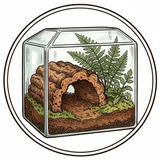
- Minimum: A 20-gallon long terrarium (30"L x 12"W x 12"H) is the absolute minimum for one adult.
- Ideal: A 36"L x 18"W x 18"H enclosure allows for a proper temperature gradient and deep burrowing.
- Style: Glass terrarium. Like Leopard Geckos, they lack sticky toe pads and cannot climb smooth glass.
Enclosure Setup (The Burrowing Need)
- Substrate (CRITICAL): They are expert excavators and spend their days deep underground. You must provide a minimum of 4 to 6 inches of substrate that holds a tunnel. A mix of Zilla Desert Mix, organic topsoil, and playsand works perfectly. Pure calcium sand is dangerous and will not hold a burrow.
- Decor: Heavy cork bark flats and rock lairs. Warning: Any heavy rocks MUST be placed on the glass bottom of the tank, not on top of the sand. The gecko will dig under them, and if the rock shifts, it will crush them.
Humidity & The Microclimate
- Surface Humidity: The top of the sand and the ambient air should be bone-dry (about 30%). Never spray the top sand wet.
- Burrow Humidity: The bottom layers of the sand must be kept moist. Pour water down a corner pipe or the tank wall 1 to 2 times a week so the bottom 2 to 3 inches stay damp (about 75%) while the surface stays dry.
- Water Source: Provide a shallow water dish.
Temperature & Lighting
- Warm Side / Basking Spot: 88–92°F (31–33°C), on a thermostat.
- Cool Side Ambient: 74–78°F (23–26°C).
- Nighttime: Can drop to 65–70°F (18–21°C).
- Lighting: A low-output UVB bulb is an optional upgrade. Follow the lamp label for distance and replacement. Even though they are nocturnal, they occasionally expose parts of their bodies to the sun near their burrow entrances.
Diet & Nutrition
Primary Diet
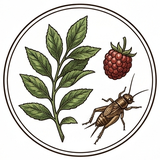
- Food Type: Live Insects. Crickets, dubia roaches, and mealworms.
- Feeding Frequency:
- Feed every 2 to 3 evenings, after the lights dim.
- No insect longer than the space between the gecko's eyes.
- Behavior: They are fierce hunters and will aggressively chase down crickets at night.
Supplements
- Calcium: Dust every bug meal with calcium with D3.
- Vitamins: Add a reptile multivitamin about once a week. Follow the supplement label.
- Gutloading: Feed your insects a high-quality gutload diet 24 to 48 hours before feeding them to your gecko. Follow the gut-load label.
Health & Husbandry
Common Health Issues
- Skin Sloughing / Lacerations — Symptoms: Missing patches of scales, raw skin. / Cause: Improper handling or aggressive tank-mates. / Treatment: Do not handle the gecko. Keep the enclosure clean and see a vet who sees reptiles. Don't use over-the-counter ointments.
- Dehydration — Symptoms: Sunken eyes, lethargy, stuck shed on toes. / Cause: Failure to provide a humid lower layer in their substrate for burrowing. / Prevention: Keep the bottom 2 to 3 inches of their deep sand mix damp. See a vet who sees reptiles if you see these signs.
- Impaction — Symptoms: Swollen belly, lack of feces. / Cause: Accidental ingestion of pure sand or improper temperatures preventing digestion. / Prevention: Use a soil/sand mix, avoid calcium sand, and keep an 88–92°F warm zone.
What We Stock & Use in Our Stores

These are products we actively carry and recommend for Frog-Eyed Gecko setups. Ask any associate for help finding them in-store.
| Category | Product | Notes |
|---|---|---|
| Enclosure | Exo Terra Natural Terrarium (Large/Low 36x18x18) | Perfect floor space and depth for deep substrate |
| Substrate | Zilla Desert Mix | Mix with a little moisture to hold incredible burrows |
| Heating | Zilla Halogen Mini Dome & Bulb | Creates a perfect, localized basking spot |
| Hides | Zilla Rock Lair | A fantastic, heavy hide they can dig underneath |
| UVB Lighting | Exo Terra Reptile UVB100 | Optional low-level UVB upgrade |
| Supplements | Zoo Med ReptiCalcium (With D3) | Dust onto insects to prevent Metabolic Bone Disease |
Last updated: 2026-08-04
How We Keep Them at Critter Cabana & Gresham Pet Supply
- Beating Dry Oregon Furnace Air (and Summer Heat Spikes): Across the Willamette Valley and Portland Metro, running the house furnace all winter drops indoor humidity to 25–35%, which quickly causes stuck sheds and dehydration in screen-top tanks. For Frog-Eyed Gecko, our crew keeps the top sand bone-dry (about 30%) and pours water down a corner 1 to 2 times a week so the bottom of a 4 to 6 inch sandy desert mix stays damp (about 75%).
- Thermostat & Linear UVB Standard: Every heating element in our Newberg and Gresham reptile rooms runs on a thermostat. For Frog-Eyed Geckos that means
88°–92°Fon the warm side with a74°–78°Fcool retreat, with lights on a day/night timer. In summer, if an upstairs room climbs above 82°F, a dimming thermostat automatically backs down the basking lamp so the cool side never overheats. - Shopping at Newberg & Gresham: For enclosures, thermostats, UVB lighting, bioactive supplies, springtails, isopods and feeders at Critter Cabana (Newberg) and Gresham Pet Supply, ask us what we have in store today.
Common Questions (FAQ)
What size tank does an adult Frog-Eyed Gecko actually need?
An adult Frog-Eyed Gecko needs at least 30x12x12 inches (20-gallon long) with 4 to 6 inches of sandy desert mix, so you can keep 88°–92°F on the warm side and 74°–78°F on the cool side.
How do I keep Frog-Eyed Gecko burrow humidity right during dry Oregon winters?
Keep the top sand bone-dry (about 30%). Never spray it wet. Pour water down a corner pipe or the tank wall 1 to 2 times a week so the bottom 2 to 3 inches of a 4 to 6 inch sandy desert mix stay damp (about 75%).
What is the best bioactive clean-up crew for a Frog-Eyed Gecko?
Frog-eyed geckos need a dry sand surface with only the bottom layer damp, so a moist soil bed is the wrong setup. If you want a clean-up crew, ask our reptile staff first. Our 1-Page or Tri-Fold Bioactive Substrate Recipe Guide covers the rest.
Where can I get Frog-Eyed Gecko setup supplies, live feeders, and thermostats in Oregon?
Ask us what we have in store today at Critter Cabana in Newberg (514 E First St, 503-537-2887) and Gresham Pet Supply (2185 NW Burnside Rd, 503-665-7606).
Shop supplies for this animal
Everything for your Frog-Eyed Gecko setup, ready for pickup in store or shipped to you.