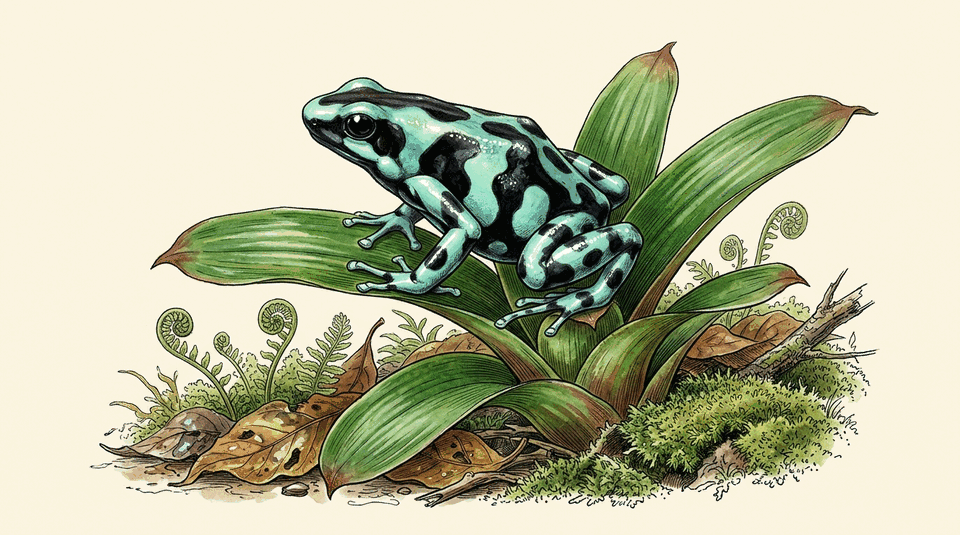
Dyeing Poison Dart Frog
Dendrobates tinctorius
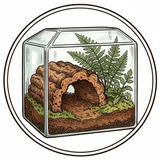
1. Building the 4-Layer Bioactive Jungle
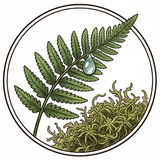
2. Two Great Ways to Set Up Your Habitat
Locking in 85% Humidity (Without Making Soup!)
The secret to Dart Frogs is keeping humidity at 85% while keeping the top leaves dry enough for their feet:
Option A: Covered Screen Top + Hand Misting (Our Top Pick!)
Cover 75–80% of the top mesh with a clear liner or glass panel—then a quick spray morning and evening keeps humidity locked right in.
Option B: Clay Drainage Layer Reservoir Underneath
A 2" base of Hydroballs / clay drainage balls under a mesh divider and Reptisoil wicks steady moisture into the air all week long!
Lighting: Plant LED vs. Shade UVB
Dart Frogs live on the shaded jungle floor, so your main light is actually for your live plants:
Option A: Full-Spectrum Vivarium Plant LED
Keeps live Bromeliads, Pothos, and moss thriving without heating up the glass box, while making your frogs' colors pop!
Option B: Plant LED + Low-Output Shade UVB
Adds gentle natural UV rays, though you still need to dust every single fly meal with calcium/vitamin powder.
Can They Live Together?
Unlike most reptiles, some Dart Frogs do great in pairs or small groups—if you match the right species:
Option A: Green-and-Black (Auratus) & Bumblebee (Leucomelas)
Super chill community frogs that usually get along great in groups of 2–4 of the same species.
Option B: Tinctorius ('Tincs' like Azureus / Cobalt)
Pairs or small groups can work, but avoid more females than males—females fight and eat each other's eggs! Watch for wrestling, separate a bullied frog, and never mix species or morphs in one tank.
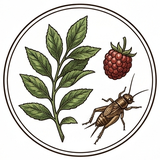
3. Feeding Guide: Flightless Fruit Flies & Springtails
Tiny Bugs & Supplements You'll Need:
Can't fly! (Melanogaster = small, Hydei = bigger)
Living cleanup crew + 24/7 snack bar
Fun occasional hunting variety
Dust every meal; add Vitamin A 2×/month

4. Four Keys to a Happy, Thriving Dyeing Poison Dart Frog
Look, Don't Touch!
Frogs breathe and drink right through their skin, so oils and soap on human hands make them sick. If you ever need to move a frog, gently coax it into a clear plastic cup!
Wet Soil, Dry Leaf Carpet!
If frogs walk on sopping-wet mud all day, they get bacterial foot rot. Put a thick 2" blanket of curved Magnolia or Sea Grape leaves over the damp soil so their toes stay dry.
The 2-Week Fly Rule
A fruit fly culture takes 2 weeks to boom and crashes after ~4 weeks. Grab or start a fresh culture every 2 weeks so you never run out of flies on a Sunday night!
Escape-Proof the Vents
Flightless flies can't fly, but they love to walk! Put a strip of fine mesh or tape over any big cord slots so the flies stay inside with your frogs.

Bring-Home Shopping Checklist
Tap items to check them off on your phone while you shop at Gresham Pet Supply.
Vivarium & 4-Layer Floor
Plants, Hides & Misting
Live Micro-Bugs & Dusts
Complete Reference Notes & Oregon Keeping Guide
Notable Morphs & Locales
- Giant Orange: A massive morph known for deep orange heads and striking black and yellow legs. One of the largest tinctorius available.
- Cobalt: Famous for a bright yellow head, black body, and brilliant cobalt blue legs.
- Powder Blue: Grayish-blue bodies with varying degrees of black spots or banding.
- Azureus: Sometimes classified as its own species in the past, but is a locale of tinctorius known for being completely bright blue with black spots.
Housing & Enclosure
Enclosure Size
- Minimum Enclosure: 18" Long x 18" Wide x 18" High for a pair.
- Ideal Enclosure: 24" x 18" x 18" (or larger). Tincs are primarily terrestrial (ground-dwelling), so floor space is much more important than vertical height.
- Style: Glass terrarium with front-opening doors and a glass or screen top with partial glass coverage to maintain high humidity. (cross-ref: Reptile/Amphibian Enclosures)
Enclosure Setup (Bioactive is Best)
- Substrate: Dart frogs require a drainage layer (hydroballs or LECA), a mesh screen divider, and 2-3 inches of ABG (Atlanta Botanical Gardens) mix or similar bioactive soil.
- Leaf Litter: CRITICAL. The entire floor of the enclosure must be covered in sterilized leaf litter (Live Oak, Magnolia, or Indian Almond leaves). Frogs live in and on the leaf litter; it prevents the soil from sticking to them and rotting their skin.
- Decor: Provide coconut hut hides (coco-huts) and live plants (Pothos, Philodendrons). Because they are heavy-bodied ground dwellers, they do not climb as much as other dart frogs.
Humidity & Water
- Humidity: Must be maintained between 80%–100%, with gentle airflow so the air isn't stale.
- Misting: Hand mist with a spray bottle 1-2 times daily, or use an automatic misting system.
- Water Source: Provide a very shallow water dish (they are heavy-bodied and poor swimmers; they will drown in deep water).
- Water Quality: Fill the dish with dechlorinated tap water only. Never use plain tap water, and never use RO or distilled water alone in the dish. RO or distilled water is for misting. Tap water containing chlorine, chloramines, or heavy metals will absorb into their skin and kill them.
Temperature & Lighting
- Ideal Temperature: 70–76°F (21–24°C).
- Nighttime: A little cooler at night is fine; stay below 80°F.
- WARNING - HEAT SENSITIVITY: Temperatures consistently above 80°F (26°C) are highly stressful and often fatal. They do not need heat lamps unless your house is very cold.
- Lighting: Provide an LED plant light for live plant growth. Low-level UVB is optional but recommended for D3 synthesis.
Diet & Nutrition
Primary Diet
- Micro-Insects: Dart frogs do not have teeth and have very small mouths. They eat Flightless Fruit Flies (Drosophila melanogaster for froglets, and the larger Drosophila hydei for adults). Because the Giant Orange is a larger frog, they prefer the larger D. hydei once mature.
- Other Feeders: Springtails and small isopods. No feeder should be longer than the space between the frog's eyes.
- Feeding Frequency: Feed froglets daily and adults every second or third day. Watch body shape: a frog showing hip bones needs more food.
Supplements (CRITICAL)
- Calcium & Vitamins: Dart frogs are extremely prone to Metabolic Bone Disease and Vitamin A deficiency. Every feeding of fruit flies MUST be dusted with calcium. Use calcium with D3 at most feedings, plus a multivitamin about once a week, following the powder label.
- Recommended Brands: Repashy Calcium Plus is highly recommended.
Socialization & Behavior
Social Needs
- Dendrobates tinctorius are known for being territorial as adults, specifically the females.
- Aggression: Female-on-female aggression is common and can be serious. Avoid more females than males: females fight and eat each other's eggs. Pairs or small groups can work. Watch for wrestling, and separate any frog that is being bullied. Ask our Animal Care team about grouping.
Handling (DO NOT HANDLE)
- Handling: Dart frogs should never be handled unless absolutely necessary.
- Why? Their skin is incredibly thin, porous, and highly absorbent. The natural oils, salts, and any soap/lotion residues on human hands will absorb directly into their bloodstream and can cause severe illness or death.
- If you MUST move them, coax them into a small plastic cup using a soft leaf, or wear powder-free, wet nitrile gloves.
Health & Husbandry

Common Health Issues
- Metabolic Bone Disease (MBD) — Symptoms: Jerky movements, unable to hop, seizing, rubbery jaw. / Cause: Lack of calcium and Vitamin D3 dusting on feeder insects. / Prevention: Strict adherence to dusting schedule.
- Short Tongue Syndrome — Symptoms: The frog strikes at a fruit fly, but the tongue doesn't stick. / Cause: Vitamin A deficiency. / Next step: See a vet who treats amphibians.
- Red-Leg Syndrome (Bacterial Dermatosepticemia) — Symptoms: Redness on the belly and underside of the legs, lethargy. / Cause: Bacterial infection often triggered by stress, dirty conditions, or waterlogged substrate. / Prevention: Keep leaf litter dry on top while soil below remains moist. Seek vet care immediately.
Signs of Illness
- Red Flag: Weight loss (visible hip bones or a sunken belly)
- Red Flag: Sitting in the water dish constantly (a sign of dehydration or parasites)
- Red Flag: Lethargy or hiding constantly
- Red Flag: Spasms or twitching
Veterinary Needs
- Locate an ARAV (Association of Reptilian and Amphibian Veterinarians) certified exotic vet before an emergency happens.
Oregon & Local Keeping Notes
- Oregon: Questions about permits or the law? Ask a store manager.
What We Use & Recommend
These are products we use and recommend for this species. Stock varies by store, so ask us what we have in store today.
| Category | Product | Notes |
|---|---|---|
| Enclosure | Exo Terra Glass Terrarium (18x18x18 or 24x18x18) | Needs horizontal floor space |
| Substrate | Zoo Med ReptiSoil + Drainage Layer (Hydroballs) | Base for a bioactive setup |
| Leaf Litter | Magnolia or Indian Almond Leaves | CRITICAL: Must cover the entire floor |
| Diet | *Flightless Fruit Flies (Drosophila hydei)* | Primary food source for adult Tincs |
| Clean Up Crew | Springtails & Isopods | Keeps the tank clean |
| Supplements | Repashy Calcium Plus | Dust on flies at every feeding |
| Water | Zoo Med ReptiSafe Water Conditioner | Essential to remove chlorine |
Last updated: 2026-08-04
How We Keep Them at Critter Cabana & Gresham Pet Supply
- Beating Dry Oregon Furnace Air (and Summer Heat Spikes): Across the Willamette Valley and Portland Metro, running the house furnace all winter drops indoor humidity to 25–35%, which quickly causes dried-out skin and dehydration in screen-top tanks. To hold
80–100% RHreliably for Dyeing Poison Dart Frog, our crew uses a deep substrate bed (or our store-shelf 10-Part Bioactive Mix of ReptiSoil, Coco Fiber, Orchiata Bark, Sphagnum Moss, and Leaf Litter), a dedicated humid hide packed with damp sphagnum moss, and partial screen cover when needed. - Thermostat & Linear UVB Standard: Our dart frogs get no basking lamp. We keep their room at 70–76°F and always below 80°F, with an LED plant light on a 12-hour day/night timer. Any heat source runs on a thermostat.
- Shopping at Newberg & Gresham: For enclosures, thermostats, UVB lighting, bioactive supplies, springtails, isopods and feeders at Critter Cabana (Newberg) and Gresham Pet Supply, ask us what we have in store today.
Common Questions (FAQ)
What size tank does an adult Dyeing Poison Dart Frog actually need?
An adult Dyeing Poison Dart Frog needs at least an 18x18x18 inch planted bioactive vivarium with a wide floor. Keep it at 70–76°F, always below 80°F, with no basking lamp.
How do I keep Dyeing Poison Dart Frog humidity at 80–100% RH during dry Oregon winters?
Oregon winter furnace heat dries out thin bedding fast. Use a deep moisture-retaining substrate mix (such as Zoo Med ReptiSoil blended with coco fiber, Orchiata bark, and sphagnum moss), provide an enclosed humid hide, and cover 50–70% of an open screen top with HVAC foil tape or a PVC panel if ambient humidity drops too low.
What is the best bioactive clean-up crew for a Dyeing Poison Dart Frog?
Pair springtails with one isopod kind that likes a humid tank. We'll help you pick an isopod kind that suits your tank's climate, and pick one isopod kind per build. Our 1-Page or Tri-Fold Bioactive Substrate Recipe Guide covers the rest.
Where can I get Dyeing Poison Dart Frog setup supplies, live feeders, and thermostats in Oregon?
Ask us what we have in store today at Critter Cabana in Newberg (514 E First St, 503-537-2887) and Gresham Pet Supply (2185 NW Burnside Rd, 503-665-7606).
Shop supplies for this animal
Everything for your Dyeing Poison Dart Frog setup, ready for pickup in store or shipped to you.