
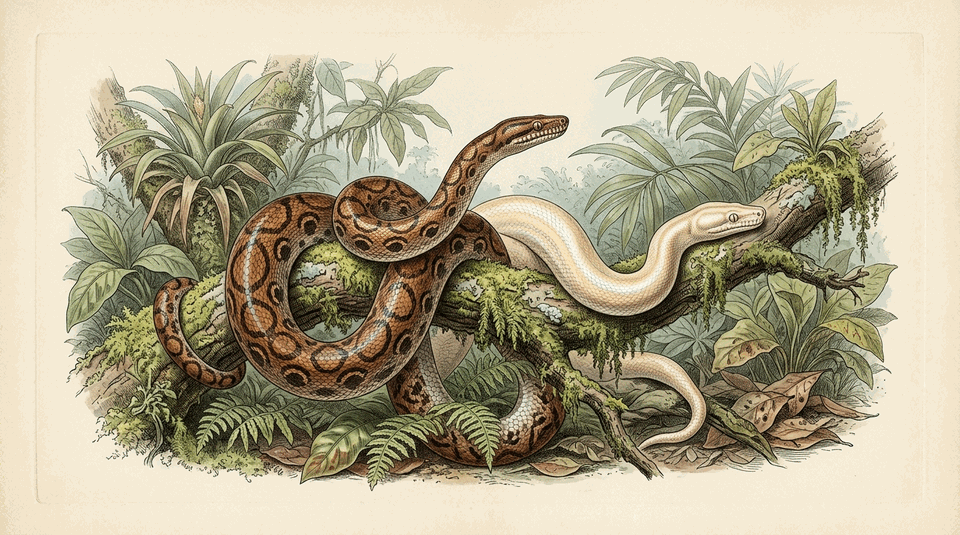
Colombian Rainbow Boa
Epicrates cenchria maurus
1. High-Humidity & Gentle-Warmth Tank Setup

2. Two Great Ways to Set Up Your Habitat
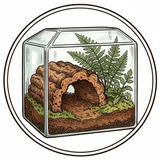
Locking 75%+ Humidity Into a Glass Terrarium
Baby Rainbow Boas dry out fast in open-screen tanks—here's how to lock that rainforest moisture right in:
Option A: Front-Opening Glass Terrarium + Covered Screen (Our Top Pick)
Cover 75–80% of the top mesh with a clear liner, use 4" of damp Reptisoil + Cypress + Sphagnum moss, and seed with springtails plus one isopod kind that likes a humid tank. We'll help you pick an isopod kind that suits your tank's climate.
Option B: 20L / 40-Gal Breeder Tank + Enclosed Humid Moss Cave
Clip the screen lid tight, cover 75% of the screen top, and give your boa an enclosed humid hide packed with damp moss 24/7.
Heating: Keep It Gentle! (84–86°F on a Thermostat)
Big No-No: don't set a Rainbow Boa tank to 92°F like a Ball Python! Temps over 88°F make Rainbow Boas regurgitate:
Option A: Under-Tank Heat Mat + Digital Thermostat (Our Top Pick)
Warms the floor under the warm cave to 85°F without drying out the humid tank air.
Option B: Deep Heat Projector (DHP) or Ceramic Heat Emitter
Gives gentle lightless warmth from above—always plug into a digital thermostat set strictly to 85°F.
Lighting to Show Off That Rainbow Shimmer
Rainbow Boas do most of their exploring after dusk, so keep daytime lighting gentle:
Option A: Low-Output Shade UVB (5%–6%) Filtered Through Leaves
Shows off that unreal prism-rainbow shimmer across their scales whenever they come out at dusk.
Option B: Soft Ambient LED Light + Dark Caves
A gentle day/night light cycle with pitch-dark caves so your boa feels tucked in safe all day.

3. Feeding Guide (Frozen/Thawed Mice & Rats)
Team Rules for Happy Boa Digestion:
Never risk a live rodent biting those iridescent scales!
Thaw in fridge, then warm sealed baggy in warm water
They're nocturnal ambush hunters that strike fast at dusk
Give Boas a full 2–3 days of zero handling after eating!

4. Four Keys to a Happy, Thriving Colombian Rainbow Boa
Keep Babies at 75–85% RH
Baby Rainbow Boas need damp (not soupy!) soil/cypress bedding and a damp moss cave 24/7 so they never get dehydrated or stuck shed.
Double-Check the Thermostat
Use a temp gun or digital probe right inside the warm hide to verify it sits right at 84–86°F.
Big Heavy Soaking Bowl
Give them a wide, heavy ceramic water dish big enough to coil their whole body inside—they love taking a dip before shedding!
Confident Baby Handling
Little babies can be nippy at first because they think everything is a giant bird! Scoop confidently from underneath and they mellow out fast as they grow.

Bring-Home Shopping Checklist
Tap items to check them off on your phone while you shop at Gresham Pet Supply.
Humidity-Locking Tank & Bedding
Low-Temp Heating & Thermostat
Caves, Big Soak Bowl & Tongs
Complete Reference Notes & Oregon Keeping Guide
High-Humidity & Gentle-Warmth Tank Setup
Big Rule: High Humidity (75–85% RH) + Never Let the Warm Spot Pass 86°F!

Temperature & Humidity Zones
| Zone | Target | Notes |
|---|---|---|
| Warm Cave / Belly Spot | 84°–86°F | BIG RULE: Keep at 84–86°F (Never over 88°F!) |
| Warm Side Air Temp | 78°–82°F | Gentle shaded rainforest warmth |
| Tank Humidity | 75–85% RH | Keep it steady. Babies dry out fast below 60% |
| Cool Side Temp | 74°–78°F | With a big soaking bowl & cool cave |
| Nighttime Temp | 74°–78°F | Use a lightless heater or heat mat on thermostat |
Two Ways That Work (100% Stocked Store Options)
Locking 75%+ Humidity Into a Glass Terrarium
Baby Rainbow Boas dry out fast in open-screen tanks—here's how to lock that rainforest moisture right in:
- Option A: Front-Opening Glass Terrarium + Covered Screen (Our Top Pick): Cover 75–80% of the top mesh with a clear liner, use 4" of damp Reptisoil + Cypress + Sphagnum moss, and seed with springtails plus one isopod kind that likes a humid tank. We'll help you pick an isopod kind that suits your tank's climate.
- Option B (Juveniles): 20L / 40-Gal Breeder Tank + Enclosed Humid Moss Cave: Clip the screen lid tight, cover 75% of the screen top, and give your boa an enclosed humid hide packed with damp moss 24/7.
Heating: Keep It Gentle! (84–86°F on a Thermostat)
Big No-No: don't set a Rainbow Boa tank to 92°F like a Ball Python! Temps over 88°F make Rainbow Boas regurgitate:
- Option A: Under-Tank Heat Mat + Digital Thermostat (Our Top Pick): Warms the floor under the warm cave to 85°F without drying out the humid tank air.
- Option B: Deep Heat Projector (DHP) or Ceramic Heat Emitter: Gives gentle lightless warmth from above—always plug into a digital thermostat set strictly to 85°F.
Lighting to Show Off That Rainbow Shimmer
Rainbow Boas do most of their exploring after dusk, so keep daytime lighting gentle:
- Option A: Low-Output Shade UVB (5%–6%) Filtered Through Leaves: Shows off that unreal prism-rainbow shimmer across their scales whenever they come out at dusk.
- Option B: Soft Ambient LED Light + Dark Caves: A gentle day/night light cycle with pitch-dark caves so your boa feels tucked in safe all day.
Feeding Guide (Frozen/Thawed Mice & Rats)
Slow & Steady Digestors: Feed 1 Rodent the Same Width as Your Boa's Belly
- Babies (Every 7–10 Days): 1 Thawed Hopper Mouse or Rat Fuzzy: Boas digest slower than corn snakes—never rush meal sizes or feed two days in a row!
- Sub-Adults (Less Often as They Grow): 1 Weaned Rat to Small Rat: Ask our staff for the schedule we use.
- Adults (Less Often Again): 1 Small to Medium Rat: Don't overfeed. Ask our staff for the schedule we use.
Team Rules for Happy Boa Digestion:
- 1. Frozen/Thawed Only: Never risk a live rodent biting those iridescent scales!
- 2. Thaw in Fridge & Warm: Thaw in fridge, then warm sealed baggy in warm water until cozy to the touch
- 3. Feed at Dusk: They're nocturnal ambush hunters that strike fast at dusk
- 4. Hands Off for 48 Hrs!: Give Boas a full 2 days of zero handling after eating!
Keeper Note: Why the 84–86°F Rule Matters So Much: Rainbow Boas come from shaded, humid river valleys rather than hot deserts. Keeping their warm spot at a gentle 84–86°F and leaving them completely alone for 48 hours after eating prevents regurgitation!
Essential Keeper Rules & Pro Tips
- Keep Babies at 75–85% RH: Baby Rainbow Boas need damp (not soupy!) soil/cypress bedding and a damp moss cave 24/7 so they never get dehydrated or stuck shed.
- Double-Check the Thermostat: Use a temp gun or digital probe right inside the warm hide to verify it sits right at 84–86°F.
- Big Heavy Soaking Bowl: Give them a wide, heavy ceramic water dish big enough to coil their whole body inside—they love taking a dip before shedding!
- Confident Baby Handling: Little babies can be nippy at first because they think everything is a giant bird! Scoop confidently from underneath and they mellow out fast as they grow.
Complete Store Setup Checklist
Humidity-Locking Tank & Bedding
- Front-Opening Glass Terrarium or 40-Gal Breeder Tank (juveniles); 4x2x2 ft for adults + Screen Clips
- Reptisoil + Forest Floor Cypress Mulch Blend (4" deep!)
- Sphagnum Moss (mixed into soil & inside the humid cave)
- Cork Bark Tubes, Sturdy Branches & Leafy Clutter
Low-Temp Heating & Thermostat
- Digital Thermostat (Set Strictly to 85°F!)
- 50W–80W Deep Heat Projector (DHP) or Under-Tank Heat Mat
- Digital Probe Thermometer & Hygrometer
Caves, Big Soak Bowl & Tongs
- 2 Snug Dark Caves (Warm & Cool) + Humid Moss Box
- Extra-Large Heavy Ceramic Water Bowl + Dechlorinator
- Long Stainless Steel Feeding Tongs + Frozen Mice / Rats
How We Keep Them at Critter Cabana & Gresham Pet Supply
- Beating Dry Oregon Furnace Air (and Summer Heat Spikes): Across the Willamette Valley and Portland Metro, running the house furnace all winter drops indoor humidity to 25–35%, which quickly causes stuck sheds and dehydration in screen-top tanks. To hold
75–85% RHreliably for Colombian Rainbow Boa, our crew uses a deep 3–5" substrate bed (or our store-shelf 10-Part Bioactive Mix of ReptiSoil, Coco Fiber, Orchiata Bark, Sphagnum Moss, and Leaf Litter), a dedicated humid hide packed with damp sphagnum moss, and partial screen cover when needed. - Thermostat & Linear UVB Standard: Every heating element in our Newberg and Gresham reptile rooms runs on a thermostat probe set to
84°–86°Fon the warm side with a74°–78°Fcool retreat, paired withOptional (5%–6% Shade UVB)on a 12-hour day/night timer. In summer, if an upstairs room climbs above 82°F, a dimming thermostat automatically backs down the basking lamp so the cool side never overheats. - Shopping at Newberg & Gresham: For enclosures, thermostats, UVB lighting, bioactive supplies, springtails, isopods and feeders at Critter Cabana (Newberg) and Gresham Pet Supply, ask us what we have in store today.
Common Questions (FAQ)
What size tank does an adult Colombian Rainbow Boa actually need?
An adult Colombian Rainbow Boa needs at least a 4x2x2 ft enclosure that holds humidity so you can maintain a gentle thermal gradient from 84°–86°F on the warm side down to 74°–78°F on the cool side.
How do I keep Colombian Rainbow Boa humidity at 75–85% RH during dry Oregon winters?
Oregon winter furnace heat dries out thin bedding fast. Use a 3–5 inch moisture-retaining substrate mix (such as Zoo Med ReptiSoil blended with coco fiber, Orchiata bark, and sphagnum moss), provide an enclosed humid hide, and cover 50–70% of an open screen top with HVAC foil tape or a PVC panel if ambient humidity drops too low.
What is the best bioactive clean-up crew for a Colombian Rainbow Boa?
Pair springtails with one isopod kind matched to your tank's humidity in a 3–5 inch bioactive soil and leaf-litter bed. We'll help you pick an isopod kind that suits your tank's climate, and pick one isopod kind per build. Our 1-Page or Tri-Fold Bioactive Substrate Recipe Guide covers the rest.
Where can I get Colombian Rainbow Boa setup supplies, live feeders, and thermostats in Oregon?
Ask us what we have in store today at Critter Cabana in Newberg (514 E First St, 503-537-2887) and Gresham Pet Supply (2185 NW Burnside Rd, 503-665-7606).
Shop supplies for this animal
Everything for your Colombian Rainbow Boa setup, ready for pickup in store or shipped to you.