
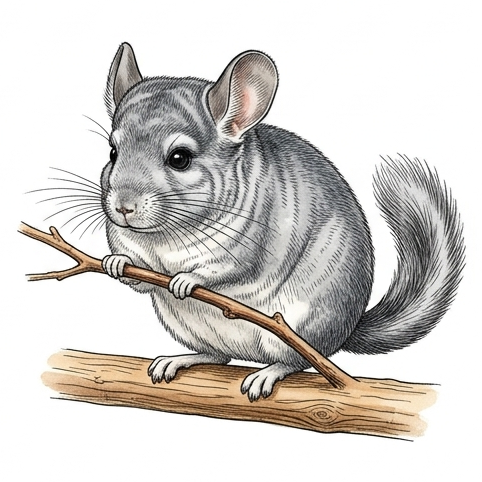
Chinchilla
Chinchilla lanigera
1. Tall Multi-Level All-Metal Cage, Wood Ledges & Cool Room

2. Two Great Ways to Set Up Your Habitat
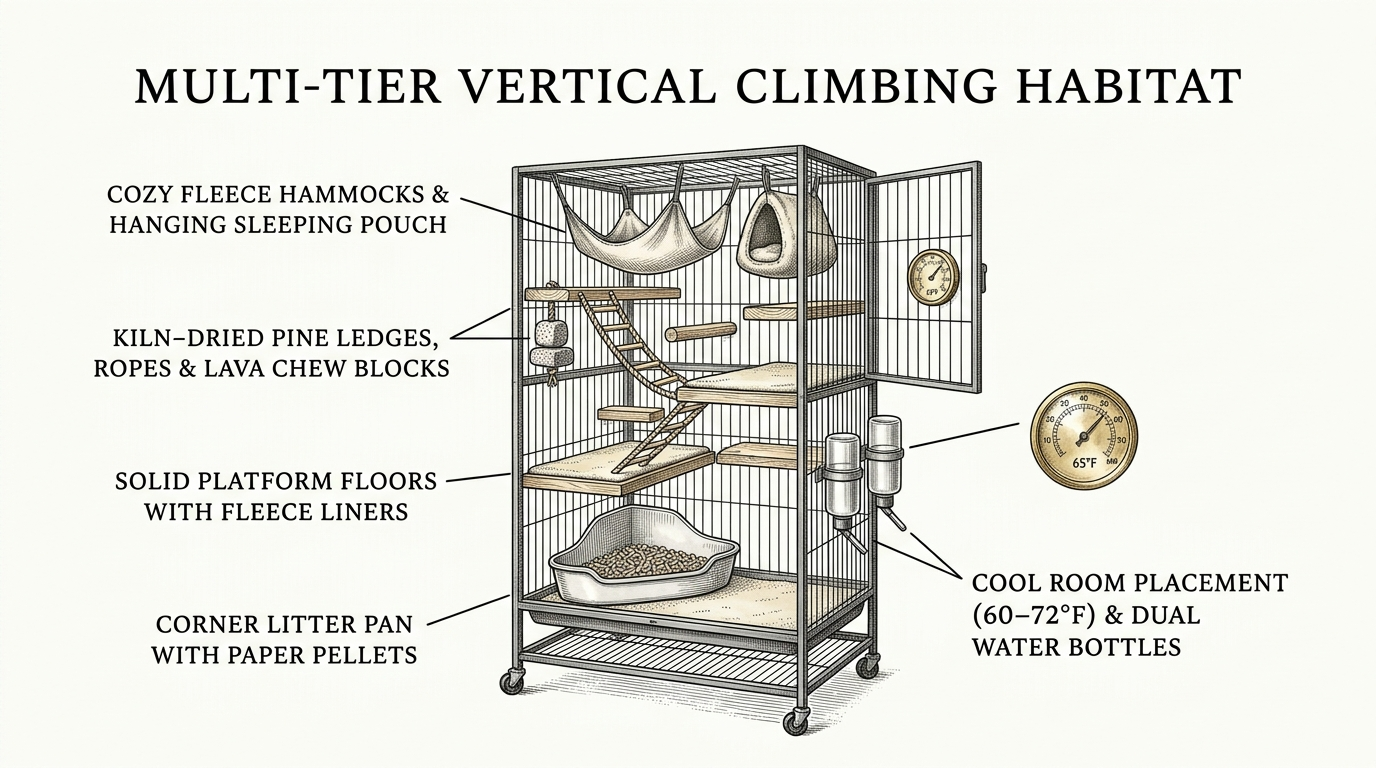
Enclosure: Tall All-Metal Cage + Kiln-Dried Pine Ledges
Chinchillas are vertical mountain jumpers—and they will eat plastic pans or ramps, which can block the gut:
Option A: Double Midwest Ferret/Critter Nation Cage + Fleece/Metal Pans (Our Top Pick!)
Remove wire ramps and install staggered kiln-dried white pine ledges and pumice lava ledges around the walls so they can ricochet from shelf to shelf!
Option B: Overlap Ledges to Prevent Long Vertical Drops
Although chinchillas jump high, a long straight fall onto a hard floor can break a leg or rib. Stagger shelves or hang a fleece hammock in the middle as a safety net.
Volcanic Dust Baths (Per the Dust Label) & Cooling Tiles
NEVER get a chinchilla wet! Their fur is so dense it cannot air-dry and will trap fungus and rot against the skin:
Option A: Chinchilla Dust Bath House (Follow the Dust Label)
Put Oxbow Poof! or Exotic Nutrition Blue Cloud Volcanic Chinchilla Dust in a bath house as often and as long as the dust label says, then take it out (left in, they over-bathe, dry out their skin, and pee in it!).
Option B: Granite 'Chin-Chiller' Cooling Slabs
Keep 1–2 polished granite or marble tiles in the cage (and a spare in the fridge on warm Oregon summer days) so your chinchilla always has a cool rock to pancake on!
Gentle Handling (Preventing 'Fur Slip' & Broken Ribs)
Chinchillas have floating, toothpick-thin ribs and a defense reflex called 'fur slip':
Option A: Let Them Hop Onto Your Hands & Support the Base of the Tail
Never grab a chinchilla tightly around the middle or chase them—they will drop a big patch of fur ('fur slip') to escape! Scoop gently from underneath and let them perch on your arm.
Option B: Big All-Metal Solid Wheel (Only!)
Hamster-size wheels are too small for a chinchilla. If you add a wheel, it must be a heavy-duty solid wheel made for chinchillas, big enough that the back stays straight (never wire or mesh).

3. Strict Dry Mountain Diet (Zero Fruit, Zero Veggies, Zero Seeds!)
Safe Chinchilla Chews & Treats vs. Dangerous Foods:
Mix in orchard, oat & botanical hays to keep meals interesting
Pumice lava blocks, kiln-dried pine blocks, willow balls, timothy cubes
No lettuce, carrots, celery, or fresh veggies (causes bloat & diarrhea)
No raisins, fruit, nuts, sunflower seeds, corn, or yogurt drops!

4. Four Keys to a Happy, Thriving Chinchilla
Air Conditioning Is Mandatory
Even in Oregon, a hot summer afternoon in a room without AC can cause heatstroke in a chinchilla. Oxbow says 60°–70°F at all times, so keep a digital thermometer right on the cage!
Zero Plastic in the Cage
Use only kiln-dried white pine, applewood, metal, ceramic, and non-pill fleece (with seams hidden). If they chew plastic pans, wrap pans in thick anti-pill fleece.
Watch for Drooling ('Slobbers')
If your chinchilla ever has wet fur under its chin, drops pellets, or prefers soft crumbs over hay, have an exotic vet check its back molars for tooth spurs.
Chinchilla-Proof Playtime
Let them out for evening playtime in a cool, enclosed hallway or bathroom (with toilet lid closed and all cords/baseboards covered) and put out their dust bath to call them back in!

Bring-Home Shopping Checklist
Tap items to check them off on your phone while you shop at Gresham Pet Supply.
Tall Metal Cage & Cooling
Volcanic Dust Bath & Chews
Hay, Plain Pellets & Glass Bottle
Complete Reference Notes & Oregon Keeping Guide
Temperature Warning (CRITICAL)

HEATSTROKE RISK: Chinchillas come from freezing mountain climates and wear a dense fur coat year-round. They cannot sweat. A warm room can kill them. Oxbow states chinchillas need 60°F to 70°F at all times, so the room has to hold that range all year (air conditioning in summer). You cannot rely on a fan; fans only cool humans because we sweat. A fan will just blow hot air on a Chinchilla.
The Dust Bath (NEVER GET THEM WET)
NO WATER BATHS: A Chinchilla's fur is so incredibly dense that if it gets wet, it cannot dry properly. The trapped moisture leads to skin problems and fungal infection.
To stay clean, they require a Dust Bath. Follow the dust maker's label for how often and how long. Use commercial volcanic pumice dust (like Oxbow Poof!). Do not leave the dust bath in the cage permanently, or they will over-bathe and dry out their skin.
Housing & Enclosure
Cage Size & Setup
- Tall is Best: Chinchillas are acrobats that love to jump up and down. They require a tall, multi-level cage. Size it by the cage maker's label for chinchillas; tall beats wide, and bigger is better.
- Solid Surfaces: The cage must have solid floors and solid shelves. Wire floors can injure their delicate feet.
- Chew Hazards: Chinchillas will chew everything. Remove all plastic shelves and ramps (swallowed plastic can block the gut). Replace them with kiln-dried pine wooden ledges or metal pans.
Enrichment
- They need an enormous, solid-surface exercise wheel. It must be big enough that their back stays straight while running, and never wire or mesh. (The "Chin Spin" is a popular metal option). Provide lots of safe wooden chew toys (apple wood, kiln-dried pine).
Diet & Nutrition
The Strict Herbivore Diet
A Chinchilla's digestive system is incredibly sensitive. They require a very bland, high-fiber diet.
- Timothy Hay (Most of the Diet): Unlimited, fresh Timothy hay must be available 24/7. This keeps their gut moving and grinds down their constantly growing teeth.
- High-Quality Pellets: Offer a plain chinchilla pellet, fed as the bag's feeding guide says. Avoid any mixes that contain seeds, nuts, dried fruit, or colorful pieces.
Toxic Foods to Avoid
- NO SUGAR/FRUIT: Raisins, fruits, and sugary treats cause bloating, diarrhea, and dangerous gut slowdowns.
- Vegetables, nuts, seeds, and human food are strictly forbidden.
What We Stock & Use in Our Stores
These are products we carry and recommend for this species. Ask any associate for help finding them in-store.
| Category | Product | Notes |
|---|---|---|
| Diet | Oxbow Essentials Chinchilla Food | Plain, high-fiber pelleted diet |
| Forage | Oxbow Western Timothy Hay | Essential for tooth and gut health |
| Housing | MidWest Critter Nation (Double Unit) | Remove plastic pans and use metal/fleece |
| Grooming | Oxbow Poof! Chinchilla Dust | Essential for keeping their coat oil-free |
Last updated: 2026-08-04
How We Keep Them at Critter Cabana & Gresham Pet Supply
- Pacific Northwest Seasonal Drafts & Indoor Air Quality: In Oregon, damp chilly winters and sudden August heatwaves are the two biggest environmental stressors for Chinchilla. Keep their tall, multi-level cage away from drafty windows, exterior doors, direct furnace vents and direct sun, in a room that holds Oxbow's 60-70°F range all year (heat is the big danger).
- What Our Store Crew Uses Daily: In our Newberg and Gresham animal rooms, we use dust-extracted, scent-free bedding (never cedar or raw phenols), unlimited fresh grass hay and a plain chinchilla pellet (no fruit, vegetables, nuts or seeds), and daily chewing enrichment so young animals are already hand-accustomed and eating a balanced diet before they go home with you.
- Local Exotic Vet Planning: Before an emergency ever happens, save the number of an experienced Oregon avian/exotic veterinarian in the Portland Metro or Willamette Valley area (such as Avian & Exotic Veterinary Care or Scales & Tails Exotic Pet Clinic).
Common Questions (FAQ)
What size cage or habitat does a Chinchilla actually need?
A tall, multi-level cage sized by the maker's label for chinchillas. They're jumpers, so tall beats wide, and bigger is better. Ask our staff to help you pick one.
How do I keep Chinchilla comfortable through Oregon winters and summers?
Oxbow says chinchillas need 60-70°F at all times, so keep the room in that range all year (air conditioning in summer; a fan won't cool a chinchilla), well away from cold window drafts in winter and direct afternoon sun in summer.
What do you feed Chinchilla at Critter Cabana and Gresham Pet Supply?
Our store crew feeds a balanced herbivore regimen built on unlimited grass hay and a plain chinchilla pellet. We never feed fruit, vegetables, nuts, seeds or sugary treats.
Where can I meet Chinchilla and talk to the animal care crew in Oregon?
Visit our live animal departments at Critter Cabana in Newberg (514 E First St, 503-537-2887) or Gresham Pet Supply (2185 NW Burnside Rd, 503-665-7606) to meet our animals and get hands-on setup advice.
Shop supplies for this animal
Everything for your Chinchilla setup, ready for pickup in store or shipped to you.