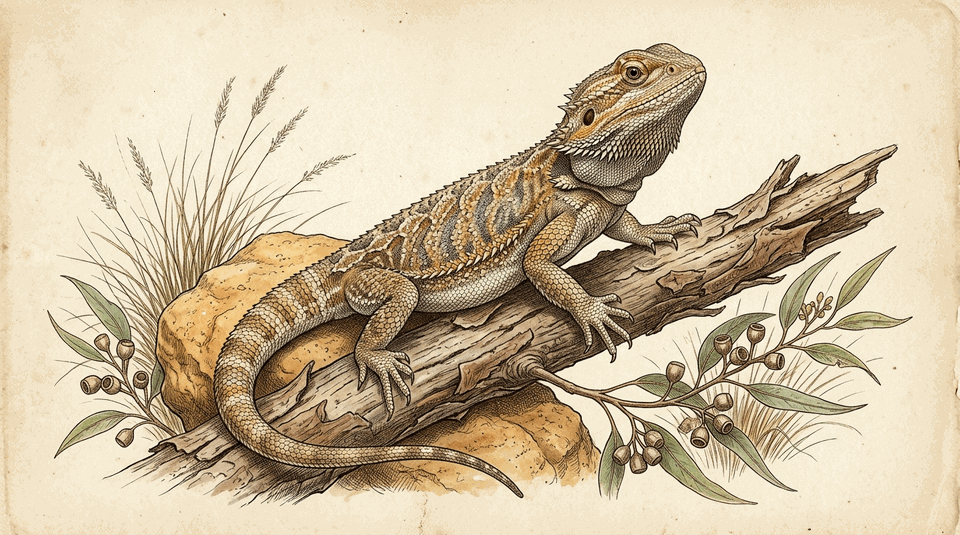
Bearded Dragon
Pogona vitticeps
1. Sunbeam Basking & Tank Setup
2. Two Great Ways to Set Up Your Habitat
Flooring: Easy-Clean Tile vs. Digging Mix
Once your basking spot is a true 100–108°F, healthy dragons do great on either setup:
Option A: Textured Slate Tile or Non-Adhesive Mat
Wipes clean in seconds, keeps their claws trimmed naturally, and is our go-to recommendation for babies under 6 months.
Option B: 70/30 Reptisoil & Fine Reptisand Mix
For adults only (no loose bedding for babies or juveniles), 4–5" of packed Reptisoil + fine quartz sand lets them dig happily (never use calcium sand!). For bioactive cleanup, talk to our reptile staff first, then add springtails + one isopod kind that handles a drier tank under a damp cork flat!
UVB Lighting: Why We Always Use a Long T5 HO Bar
Skip screw-in coil UVB bulbs—they don't reach far enough for a Bearded Dragon! Use a linear T5 HO hood right on the screen:
Option A: 12%–14% / 10.0 T5 HO Bar on Top of Screen (Our Top Pick!)
Screen mesh blocks ~30% of UV light, so a strong 12%–14% or 10.0 T5 HO fixture resting on the screen 10–12" above the basking branch is ideal.
Option B: Overlap Your T5 UVB Hood & Basking Dome!
Set your T5 UVB bar and 100W–150W halogen basking dome side-by-side on the warm end so your dragon gets heat and UV in the exact same sunbeam.
Keeping Them Hydrated
Many dragons ignore standing water bowls because they're wired to drink raindrops off plants:
Option A: Mist Their Morning Collard Greens + Offer Hornworms
Spraying their daily greens with water (and treating them to a juicy hornworm) sneaks water right in with breakfast.
Option B: Dripping Water on the Snout or Warm Soaks
Drip water gently on the tip of their nose until they lick, or offer a 10-minute warm belly-deep bath during big sheds.
3. The Diet Flip: Bugs for Babies → Greens for Adults
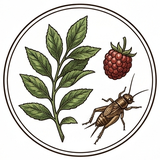
What Goes in the Salad Bowl & Bug Dish:
Collard, dandelion, mustard, turnip greens, endive
Dubia roaches, crickets, Calci-Grubs (BSFL)
Grated butternut squash, bell pepper, flower toppers
Skip fruit (rots teeth!); NEVER feed avocado or fireflies!

4. Four Keys to a Happy, Thriving Bearded Dragon
Swap UVB Bulbs on Time
UVB tubes stop making invisible UV rays long before the light burns out! Write the install date on the bulb and replace it when its label says.
Winter 'Brumation' Naps
When winter hits, adult dragons often get sleepy and hide for weeks. Don't panic—that's brumation! Just have a vet check a poop sample first to make sure parasites aren't the culprit.
Waving & Head-Bobbing
Little slow arm-waves mean 'I'm friendly / you're the boss!' Fast head-bobbing and a black beard mean they're feeling feisty. Always house dragons 100% solo.
2-Hour Digestion Rule
Make sure you feed at least 2 hours before the lights click off at night—they need that 105°F basking heat to digest dinner!

Bring-Home Shopping Checklist
Tap items to check them off on your phone while you shop at Gresham Pet Supply.
Enclosure & Decor
Sunbeam Heating & T5 UVB
Greens, Bugs & Supplements
Complete Reference Notes & Oregon Keeping Guide
Housing & Enclosure
Enclosure Type & Size
- Type: PVC, sealed wood, or glass front-opening terrarium. PVC or wood is preferred as it holds heat much better than glass.
- Minimum: Zoo Med says adults need, at minimum, a 40-gallon terrarium (36" x 18" x 18"). That is a minimum.
- Recommended: Bigger is better for an adult. More room means more space to move and a better warm-to-cool range.
- Lid: Secure screen lid to allow for maximum ventilation and light penetration.
- Juveniles: Zoo Med says juveniles need, at minimum, a 20-gallon terrarium (30" x 12" x 12").
Substrate
- Recommended (Solid): Slate tile (naturally files their nails), newspaper, or paper towels.
- No loose bedding for babies and juveniles. They can swallow it and get a blockage.
- Avoid: Calcium sand (they may eat it, which can cause a blockage), Wood chips, Crushed walnut shells.
Décor & Enrichment
- Basking Spot: A wide, flat rock or thick piece of driftwood placed directly under the heat lamp. Slate rocks are excellent for absorbing and radiating belly heat.
- Hides: Minimum of two hides (warm side and cool side) large enough for the dragon to completely conceal itself.
- Climbing: Sturdy branches or hammocks. They love to survey their territory from a high vantage point.
Temperature
Bearded dragons come from the harsh Australian outback and require intense heat to digest their food.
| Zone | Temperature (Zoo Med) |
|---|---|
| Basking Spot | 95–105°F |
| Daytime Range | 75–90°F |
| Nighttime | 70–80°F (should not dip below 70°F) |
Heating
- Primary: Overhead Halogen flood bulb (e.g., Zoo Med Repti Basking Spot Lamp) to provide intense, bright heat.
- Nighttime: Only necessary if your room gets colder than 70°F at night. Use a Ceramic Heat Emitter (CHE) which provides heat without light. NEVER use red or blue "night bulbs" as they disrupt the dragon's sleep.
- CRITICAL: Use a digital thermometer with a probe or an infrared temp gun to measure the actual basking surface temperature, not just the air temperature.
- (cross-ref: Reptile/Amphibian Heating)
Humidity
- Target Range: Dry. Typical household humidity is fine.
- How to Maintain: Keep the enclosure dry with good airflow.
Lighting (CRITICAL: UVB)
- Photoperiod: Lights on by day, off at night. Set the hours from the light or timer maker's instructions.
- UVB: ABSOLUTELY REQUIRED. Without UVB, a bearded dragon can't use the calcium it eats and develops Metabolic Bone Disease (MBD).
- Type: Use a high-output desert UVB lamp. Distance is different for every lamp and depends on whether there is a mesh top in between, so follow the lamp's instructions. UVB does not pass through glass.
- Placement: Position the UVB tube to overlap with the basking light so the dragon gets heat and UVB simultaneously.
- Replacement: UVB tubes stop producing UVB long before they burn out visually. Replace the bulb when its label says. Write the install date on the bulb or box.
- UVB Recommendations: A high-output desert UVB lamp. Ask our reptile staff to help you pick one.
Diet & Nutrition
Bearded dragons are omnivores. Their diet shifts dramatically from insect-heavy (as growing babies) to salad-heavy (as adults).
Feeding Schedule
Zoo Med says: "Juveniles require a high-protein, insect-heavy diet, while adults require a high-fiber, plant-heavy diet."
- Babies and juveniles: Mostly insects, with greens offered too.
- Adults: Greens are the staple. Insects are the side dish.
- How much and how often depends on age and body condition. Ask our reptile staff for help.
Prey Items & Salads
- Staple Insects: Dubia roaches, crickets, black soldier fly larvae (Nutrigrubs), silkworms.
- Treat Insects (High Fat/Chitin): Hornworms (great for hydration), mealworms, superworms, waxworms.
- Staple Greens (Daily): Collard greens, mustard greens, turnip greens, dandelion greens, endive, escarole.
- Occasional Veggies: Butternut squash, bell peppers, carrots.
- Avoid: Iceberg lettuce (zero nutrition, causes diarrhea), Spinach/Beet Greens (binds calcium), Avocado/Rhubarb (toxic), Fireflies (highly toxic/fatal).
- Size Rule: Never feed insects larger than the space between the dragon's eyes to prevent impaction.
Supplements
- Gut-load feeders 24 to 48 hours before feeding. Follow the label on the gut-load.
- Dust insects with calcium every time you feed.
- Use calcium with D3 at most feedings, plus a multivitamin about once a week. Follow the label on the powder.
- Supplement Recommendations: Zoo Med Repti Calcium and Zoo Med Reptivite. (cross-ref: Reptile/Amphibian Supplements)
Water
- Provide a shallow water dish. Many dragons do not recognize standing water; check that your dragon actually drinks. Zoo Med says a shallow bath can help hydrate your dragon and promote healthy shedding. Keep baths shallow and supervised.
Health & Husbandry

Common Health Issues
- Metabolic Bone Disease (MBD): Soft or rubbery jaw, kinked tail, tremors, dragging hind legs, lethargy. Usually from missing or worn-out UVB. See a vet who sees reptiles.
- Impaction: No droppings, a swollen belly, lethargy, or back legs that don't work. See a vet who sees reptiles.
- Skin problems: Yellow, crusty patches on the skin or scales. See a vet who sees reptiles.
- Stargazing: Staring straight up at the ceiling, failure to thrive, extreme lethargy, wasting away. See a vet who sees reptiles.
Shedding
- Bearded dragons shed in patches (unlike snakes).
- Never peel pulling or stuck shed, as it can damage the scales underneath.
- Check the toes and tail tip. Old skin left there can cut off blood flow. If shed is stuck on the toes or tail tip, see a vet who sees reptiles.
Veterinary Needs
- If you see any of the signs above, see a vet who sees reptiles.
Morphs & Varieties
Note: True morphs are genetic scale or pigment mutations. Words like "Citrus," "Blood Red," or "Sunburst" just describe the color selectively bred into the dragon.
Scale/Texture Morphs
- Leatherback: Reduced scale size and lacks spikes down the back, resulting in a smoother appearance and often brighter colors.
- Silkback ("Silkie"): Completely scaleless. Their care is different from other dragons. Talk to our reptile staff before buying one.
- Dunner: Irregular, chaotic scale patterns that point in all directions, especially notable on the chin and tail.
Pigment/Pattern Morphs
- Hypomelanistic (Hypo): Reduced dark pigmentation, resulting in pastel/lighter colors. Identified by their clear (translucent) fingernails lacking the normal black stripe.
- Translucent (Trans): Scales appear slightly clear/gummy. As babies, they often have blue bellies. They typically feature solid black "alien" eyes.
- Zero: A completely patternless, color-free dragon resulting in a stunning silvery-white animal.
Handling Guidelines
- Support: Always support all four legs and the tail. Do not grab them from above, as their "parietal eye" (a photoreceptor on top of their head) detects overhead shadows like birds of prey.
- Reading Body Language:
- Black Beard: Extreme stress, anger, or feeling unwell.
- Head Bobbing: Territorial display or dominance (fast bobbing). Slow bobbing can be submission.
- Arm Waving: A sign of submission ("I'm just a baby, don't eat me!").
- Gaping (Mouth Open): Normal thermoregulation! Like a dog panting, they open their mouths to vent excess heat while basking.
Compatibility
- Cohabitation: Strictly solitary. Bearded dragons are highly territorial. Housing them together routinely results in missing toes, missing tails, or death. Do not cohabitate.
Oregon & Local Keeping Notes
- Oregon: For permit or local rule questions, ask a store manager.
What We Stock & Use in Our Stores
These are products we carry and recommend for this species. Ask any associate for help finding them in-store.
| Category | Product | Notes |
|---|---|---|
| Enclosure | Exo Terra Glass Terrarium 36x18x18 | Zoo Med's adult minimum; bigger is better |
| Substrate | Slate tile, newspaper or paper towels | No loose bedding for young dragons. NO Calcium Sand |
| Heating | Zoo Med Repti Basking Spot Lamp | Always on a thermostat; measure the basking surface |
| Thermostat | Zoo Med ReptiTemp Digital Thermostat | Prevents overheating/fires |
| Thermometer | Exo Terra Infrared Temp Gun | Critical for measuring surface temp |
| UVB Lighting | Zoo Med ReptiSun T5 HO 10.0 Terrarium Hood | ABSOLUTELY REQUIRED (Linear tube) |
| Supplements | Zoo Med Repti Calcium | Dust insects |
| Hides | Exo Terra Reptile Cave (Large) | Need warm and cool options |
| Basking Spot | Zoo Med Cork Bark or Slate Rock | Absorbs heat well |
| Feeder Insects | Dubia Roaches, Crickets, Hornworms | Size no larger than space between eyes |
Last updated: 2026-08-04
How We Keep Them at Critter Cabana & Gresham Pet Supply
- Beating Dry Oregon Furnace Air (and Summer Heat Spikes): Across the Willamette Valley and Portland Metro, running the house furnace all winter drops indoor humidity to 25–35%, which quickly causes stuck sheds and dehydration in screen-top tanks. Bearded dragons are different: they come from dry country, so we keep their enclosures dry with good airflow.
- Thermostat & Linear UVB Standard: Every heating element in our Newberg and Gresham reptile rooms runs on a thermostat, with a hot basking spot and a cooler retreat, and the heat and UVB lights run on a day/night timer. In summer, if an upstairs room climbs above 82°F, a dimming thermostat automatically backs down the basking lamp so the cool side never overheats.
- Shopping at Newberg & Gresham: For enclosures, thermostats, UVB lighting, bioactive supplies, springtails, isopods and feeders at Critter Cabana (Newberg) and Gresham Pet Supply, ask us what we have in store today.
Common Questions (FAQ)
What size tank does an adult Bearded Dragon actually need?
Zoo Med says adults need, at minimum, a 40-gallon terrarium (36x18x18 inches). Bigger is better, so you get more room for a hot basking spot at one end and a cooler end at the other.
Does my Bearded Dragon need extra humidity during dry Oregon winters?
No. Bearded dragons come from dry country. Keep the enclosure dry with good airflow. Typical household humidity is fine.
What is the best bioactive clean-up crew for a Bearded Dragon?
Bearded dragons are kept dry, and babies and juveniles go on a solid floor with no loose bedding. If you want a bioactive setup for an adult, talk to our reptile staff first. It has to stay dry, so only an isopod kind that handles a drier tank fits. We'll help you pick an isopod kind that suits your tank's climate. Our 1-Page or Tri-Fold Bioactive Substrate Recipe Guide covers the rest.
Where can I get Bearded Dragon setup supplies, live feeders, and thermostats in Oregon?
Ask us what we have in store today at Critter Cabana in Newberg (514 E First St, 503-537-2887) and Gresham Pet Supply (2185 NW Burnside Rd, 503-665-7606).
Shop supplies for this animal
Everything for your Bearded Dragon setup, ready for pickup in store or shipped to you.